
Diesel Genset Manufacturer: 20–3,000 kW Options
Diesel Genset Manufacturer: 20–3,000 kW Options
If you are evaluating a diesel genset manufacturer for an Indonesia project, start by matching the generator set’s prime or standby rating, frequency, voltage and configuration to the site’s actual electrical and operating requirements. The product examples reviewed here range from 20 kW to 3,000 kW and are listed at 50 Hz, with stated output voltages that vary by model. Those details provide a starting point for comparison—not confirmation that a particular model is suitable for your site. Ask the supplier to verify the complete specification against your load schedule and local project requirements before procurement.
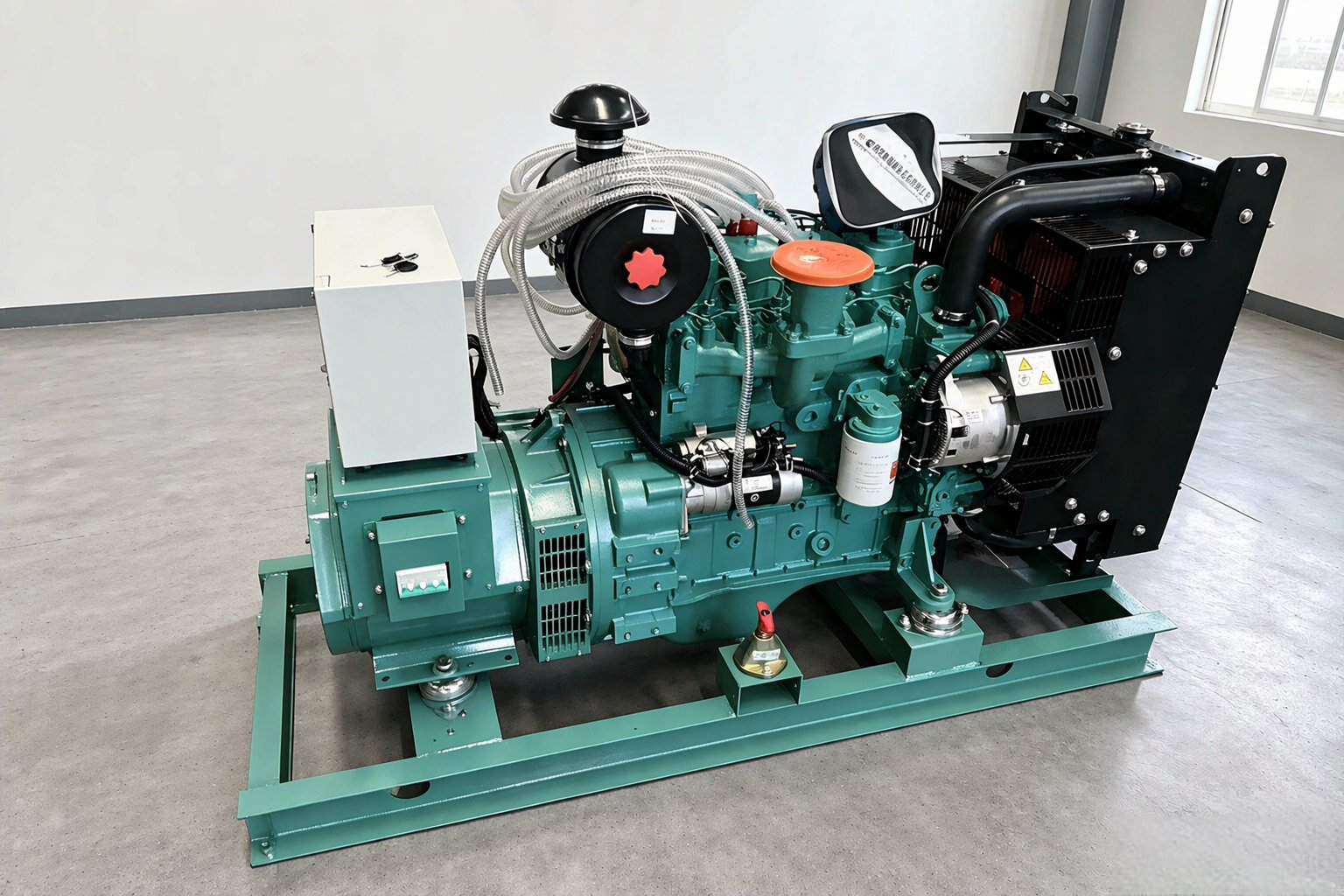
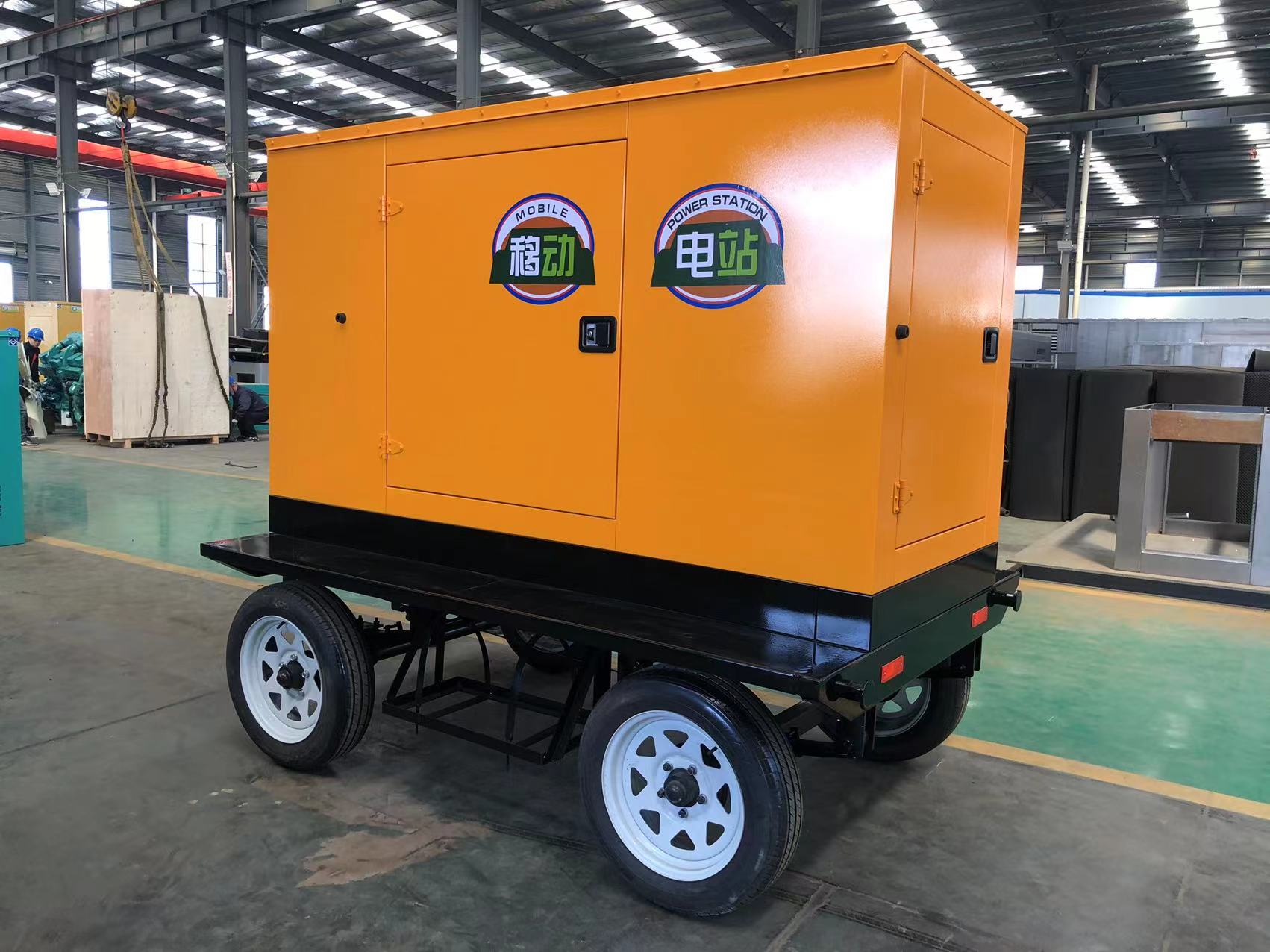
Illustrative generator photo; exact enclosure, frequency and configuration may differ from the model discussed.
Diesel genset manufacturer options: compare capacity, frequency and voltage
A useful initial shortlist should compare like with like. Check the rating basis first, then compare electrical output and installation constraints. The following examples show part of the available capacity range; all figures below are product data as stated.
- KC-DC20G: 20 kW prime power and 22 kW standby power; 50 Hz; 400/230 V. It uses a 4B3.9-G1 diesel engine and KCI-20 alternator. (P1)
- KC-W64Y88: 64 kW prime power and 70 kW standby power; 50 Hz; 400/230 V. It is listed with a WP4.1D80E200 diesel engine and KCI-64 alternator. (P2)
- KC-P160: 160 kW prime power and 176 kW standby power; 50 Hz; 230/400 V. Its listed engine is the Perkins 1106A-70TAG4, paired with a KCI-160 alternator. (P3)
- KCV-282GF: 282 kW prime power and 310 kW standby power; 50 Hz; 400/230 V. The listed engine is TAD1342GE-B, with a KCI-282 alternator. (P4)
- KC-450: 450 kW prime power and 500 kW standby power; 50 Hz; 400/230 V. Its listed engine and alternator models are KCV550 and KCI-450. (P5)
- KC-C650: 650 kW prime power and 700 kW standby power; 50 Hz; 400/230 V. It is listed with a KTA38-G2E diesel engine and KCI-650 alternator. (P6)
- KC-S1118: 1,118 kW prime power and 1,229.8 kW standby power; 50 Hz; 400/230 V. Its listed engine is 6WTAA35-G313, with a KCI-1118 alternator. (P7)
- KC-YC3000: 3,000 kW prime power and 3,300 kW standby power; 50 Hz; 380/220 V. Its listed engine and alternator models are YC16VC4900-D30 and KCI-3000. (P8)
The voltage notation is not identical across the examples, and one model’s stated value should not be assumed for another. For an Indonesia procurement, confirm the project’s required frequency, voltage, phase, wiring arrangement and connection details with the electrical designer and supplier. The product records list three-phase, four-wire, Y connection for these examples, but site compatibility still needs to be checked against the project design.
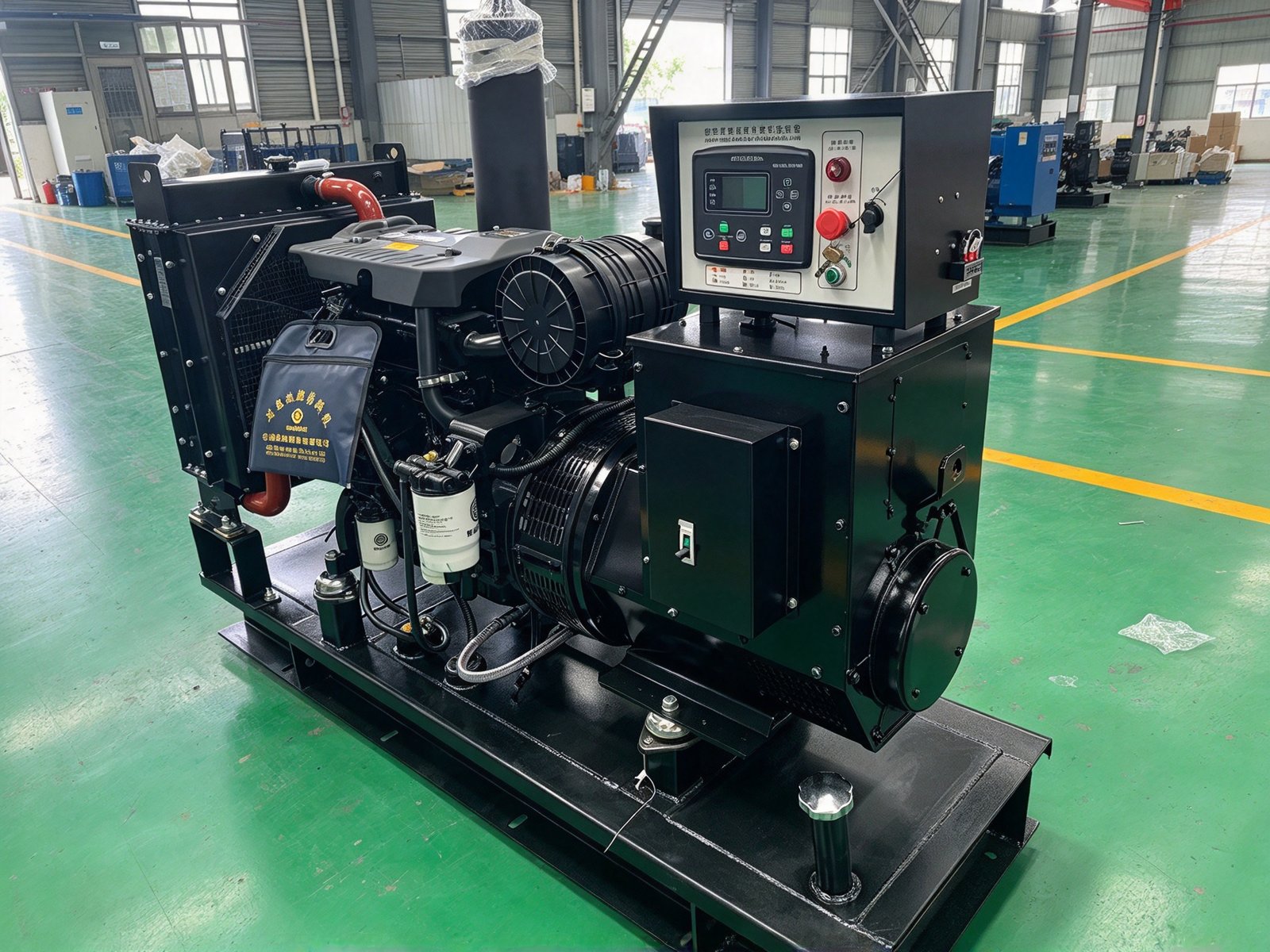
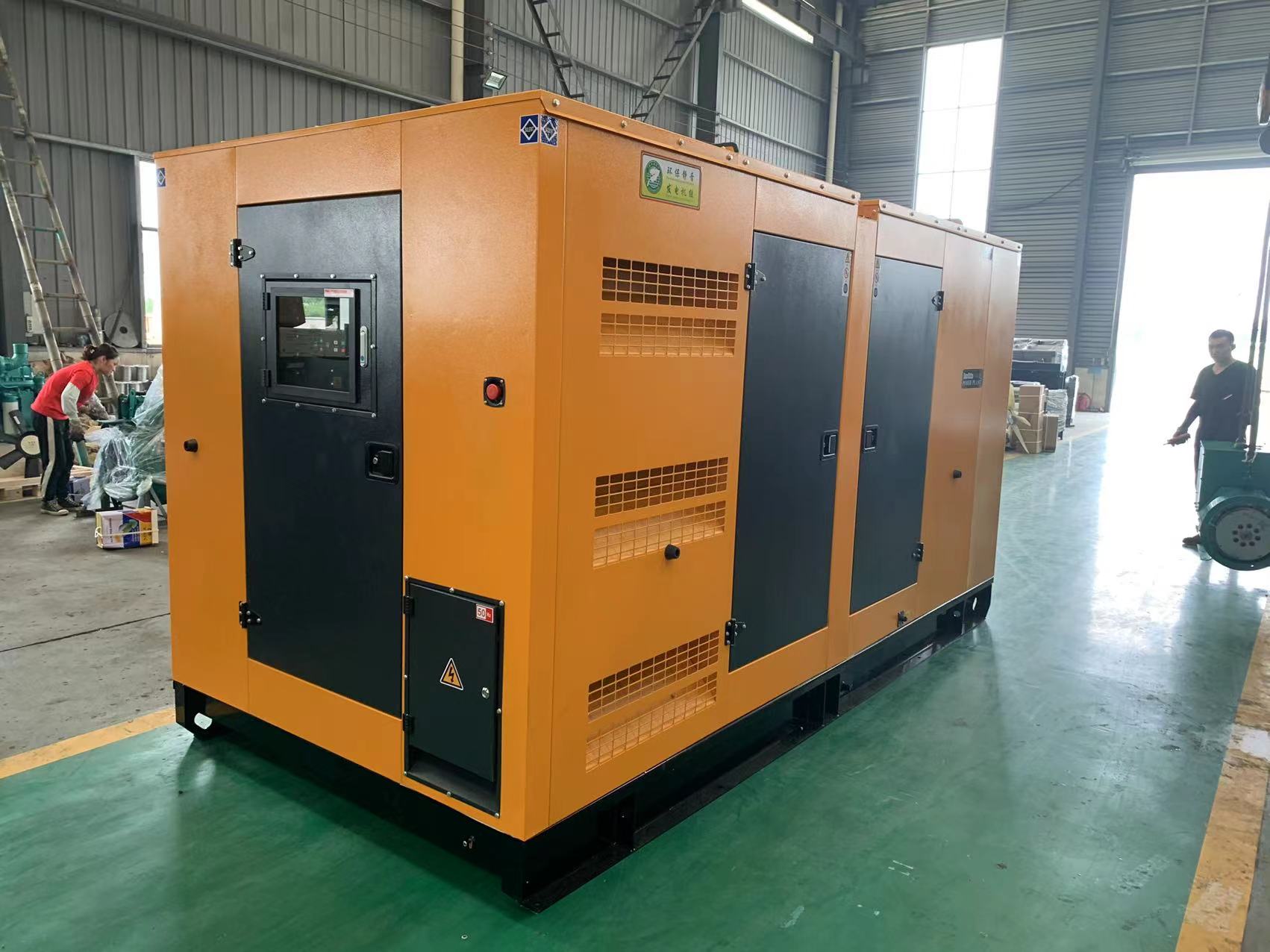
Illustrative generator photo; exact enclosure, frequency and configuration may differ from the model discussed.
Select prime power or standby power for the duty
Prime power and standby power are separate ratings, not interchangeable labels. Compare the expected regular operating duty with the prime rating, and compare an emergency-backup requirement with the standby rating. Before asking for a quotation, document whether the generator will be used as a regular power source, for backup, or in another operating arrangement. Have the supplier confirm the applicable rating basis and permitted operating profile for the exact model.
Build the capacity calculation from the equipment that will actually run. List each load, its operating demand, whether it runs continuously or intermittently, and any starting or transient demand that the electrical designer needs to assess. Include planned future loads if they are part of the project scope. Do not select a genset merely because its headline kW number is close to an estimated site total: ask a qualified project engineer to account for load sequencing, simultaneous operation and the characteristics of the connected equipment.
For larger projects, ask whether the proposal is for one generator set or a multi-unit arrangement, and request a clear schedule of ratings and electrical interfaces for the proposed scope. The listed examples establish that products are available at several capacities, including 450 kW, 650 kW, 1,118 kW and 3,000 kW. They do not establish the correct configuration for a specific facility; that decision depends on the site load and project design.
Check frequency, voltage and connection requirements early
Frequency and voltage can determine whether an otherwise plausible model fits a project. The examples above are listed at 50 Hz, but their voltage values include both 400/230 V and 380/220 V, as well as a model stated as 230/400 V. Confirm the required electrical output from the project documents rather than inferring it from the location or from another model in the range.
Ask the supplier to state the proposed output voltage, frequency, phase, connection method and rated current on the quotation and technical submittal. Check these against the facility’s distribution equipment and the electrical engineer’s requirements. For an Indonesia project, also ask the project team and supplier to confirm any applicable local electrical, emissions, import or installation requirements. No local approvals or compliance status should be assumed from a product’s listed rating or emissions label alone.
The product examples specify three-phase AC synchronous alternators, AVR (automatic voltage regulator), IP23 protection class and H-class insulation. These are useful comparison points where relevant to the project specification. They do not replace a review of the site environment, enclosure requirements, installation location or any project-specific protection and control requirements. Request the complete data sheet and clarify any configuration options that affect the delivered equipment.
Match the capacity to the application and site layout
A small commercial or light industrial facility may begin its evaluation with a lower-capacity model, while a larger industrial site or infrastructure project may need to assess higher-rated equipment. Treat those as screening examples, not fixed application-to-model matches. Load profiles differ, and a model should be selected only after the electrical demand and duty are assessed.
Anonymized project records provide a limited reference point for industrial procurement: factory/logistics applications include generator-set projects recorded at 250 kW and 600 kW. One 600 kW entry identifies a Yuchai YC6TD1000-D31 engine. The available records do not identify customers, locations or project outcomes, so they should be used only as examples of recorded industry and power levels—not as endorsements or evidence of performance at a particular site. (C1, C2, C3)
Physical fit is another early screening task. Ask for the dimensions and weight of the exact configuration under consideration, then compare them with access routes, floor or foundation capacity, lifting plans and the proposed equipment-room layout. For example, the listed KC-DC20G dimensions are 17007501100 mm and its stated weight is 750 kg; the KC-C650 is listed at 430017002450 mm and 7,500 kg. Confirm whether the quoted dimensions and weight apply to the offered configuration and whether installation accessories or enclosure choices change them. (P1, P6)
Discuss fuel, cooling, controls and alternator details in the same technical review. The listed examples specify diesel fuel, closed water-circulation forced-air cooling, electric starting and AVR regulation. Engine governor descriptions vary among models. Ask the supplier to identify the exact offered configuration and provide any additional information your engineering team needs; do not assume that a detail shown for one model applies to the entire range. (P1, P2, P3, P4, P5, P6, P7, P8)
Prepare a clear supplier inquiry
A well-formed request for quotation helps procurement teams compare offers on a consistent basis. Include:
- Project country and site conditions, plus the expected role of the genset.
- A load schedule, including operating demand, starting loads and planned future equipment.
- Required prime or standby duty and the expected operating pattern.
- Required frequency, voltage, phase, connection and any project-specific electrical interfaces.
- Space, access, weight, installation and environmental constraints known to the project team.
- Required technical documents, controls or accessories, and any applicable project approval criteria.
Ask each supplier to identify the offered model, prime and standby ratings, engine and alternator models, frequency, voltage, connection details, dimensions, weight and stated emissions information. Request written confirmation of which items are included in the offer and which requirements need further checking. For an Indonesia project, separately confirm local compliance, logistics, commissioning and after-sales arrangements with the supplier and relevant project stakeholders; availability and terms are not established by the product data presented here.
Before placing an order, compare the technical submittal with the final load schedule and site electrical design. Resolve differences in ratings, voltage, configuration and scope in writing. This step helps procurement, EPC and facilities teams evaluate offers consistently without treating a model’s headline capacity as a complete project specification.
To begin an inquiry, send the supplier your load schedule, intended duty, required electrical output and site constraints. Request a model recommendation and a written technical proposal that shows how the offered configuration addresses each requirement. If a requirement is not yet confirmed, flag it as an open item rather than assuming it is covered. That gives your engineering and procurement teams a clear basis for reviewing the proposal before purchase.
FAQ
What routine maintenance intervals are listed for a diesel generator set?
The guidance specifies an initial service at 50 hours, including changing the engine oil, oil filter and fuel filter. Routine maintenance is listed every 200–250 hours: change the oil and three filters; check the belt, coolant, battery, piping and fasteners; and clean the air filter and radiator. A comprehensive inspection is listed annually. Confirm the requirements for the specific model with its supplier.
What should I check if a generator set shuts down and will not restart?
Check the controller’s fault-code history first. If an overspeed, high-temperature or low-oil-pressure protection event occurred, the guidance says the protection may need to be manually reset. If there is no fault code, check the battery and fuel system.
What can cause a brushless alternator to have no voltage output after being stopped?
The guidance identifies loss of residual magnetism as a possible cause and says magnetization can restore it. It also notes that moisture can contribute to winding demagnetization, so keep the generator room dry.
Stay Updated with Our News
Subscribe to our newsletter for the latest industry insights and product updates.