
Generator Manufacturer: Diesel Genset Selection Guide
Generator Manufacturer: Diesel Genset Selection Guide
If you are comparing a generator manufacturer for an Indonesian project, start by matching the genset’s prime or standby rating, frequency, voltage and operating duty to the site requirement—not by selecting a model from its kW figure alone. The diesel generator examples below range from 20 kW to 3,000 kW, and the listed products are rated at 50 Hz. Before requesting a quotation, confirm the project’s required frequency, voltage, phase arrangement, load profile, emission acceptance and installation conditions with the project engineer and supplier.
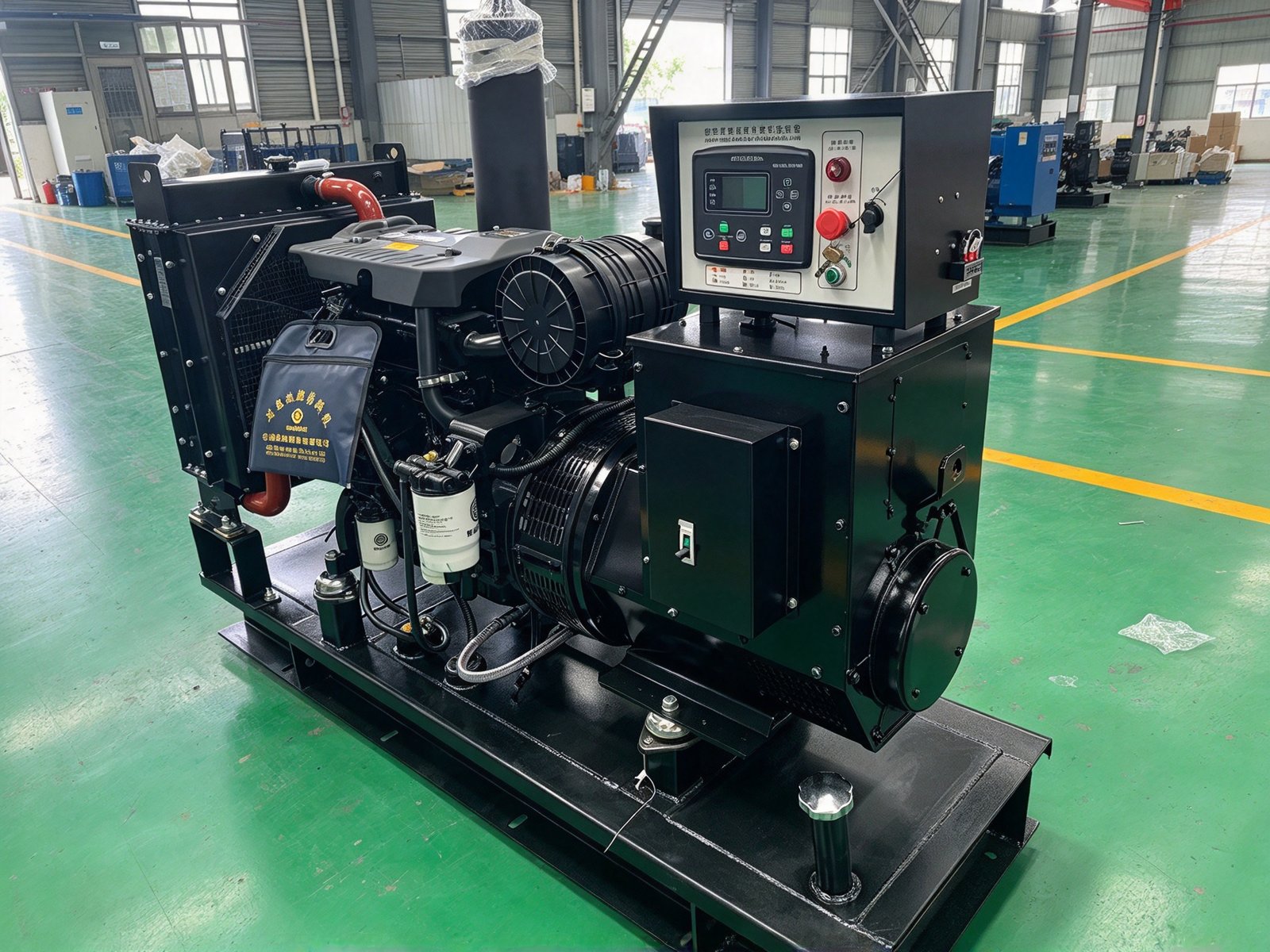
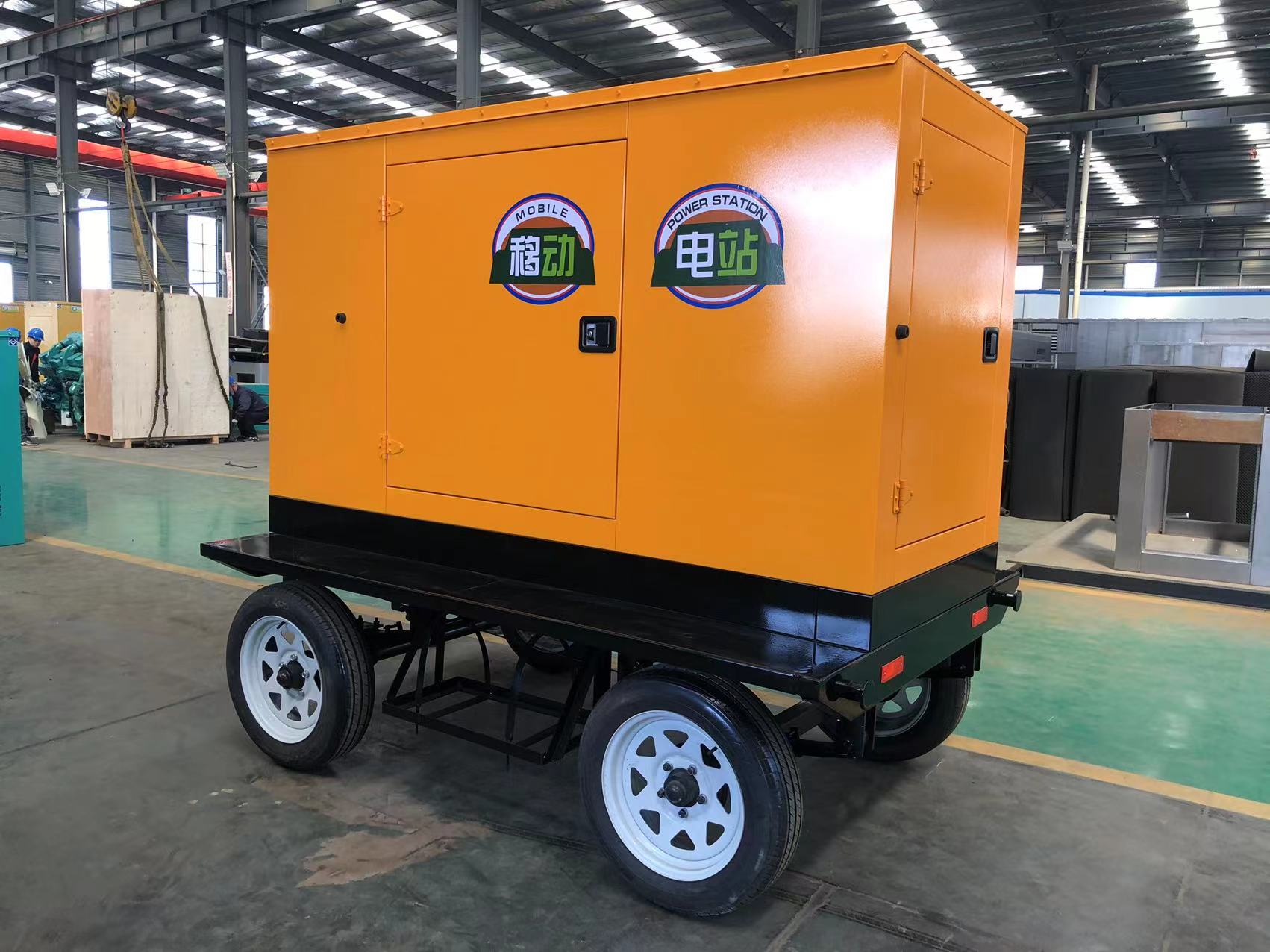
Illustrative generator photo; exact enclosure, frequency and configuration may differ from the model discussed.
Generator manufacturer options: compare ratings and configurations
The product examples offer several engine and power levels. Ratings shown are in kW; kVA ratings are not provided. Voltage and engine details below are stated for each specific model, so do not assume they apply to other configurations.
- KC-DC20G: 20 kW prime power and 22 kW standby power; 50 Hz; 400/230V. It uses a 4B3.9-G1 diesel engine and KCI-20 alternator. The listed emission category is China Stage II. [P1]
- KC-W64Y88: 64 kW prime power and 70 kW standby power; 50 Hz; 400/230V. It uses a WP4.1D80E200 diesel engine and KCI-64 alternator. The listed emission category is China Stage II. [P2]
- KC-P160: 160 kW prime power and 176 kW standby power; 50 Hz; 230/400V. It uses a Perkins 1106A-70TAG4 diesel engine and KCI-160 alternator. [P3]
- KCV-282GF: 282 kW prime power and 310 kW standby power; 50 Hz; 400/230V. It uses a Volvo TAD1342GE-B diesel engine and KCI-282 alternator. The listed emission category is China Stage II. [P4]
- KC-450: 450 kW prime power and 500 kW standby power; 50 Hz; 400/230V. It uses a KCV550 diesel engine and KCI-450 alternator. The listed emission category is China Stage II. [P5]
- KC-C650: 650 kW prime power and 700 kW standby power; 50 Hz; 400/230V. It uses a KTA38-G2E diesel engine and KCI-650 alternator. The listed emission category is China Stage III. [P6]
- KC-S1118: 1,118 kW prime power and 1,229.8 kW standby power; 50 Hz; 400/230V. It uses a 6WTAA35-G313 diesel engine and KCI-1118 alternator. The listed emission category is China Stage III. [P7]
- KC-YC3000: 3,000 kW prime power and 3,300 kW standby power; 50 Hz; 380/220V. It uses a YC16VC4900-D30 diesel engine and KCI-3000 alternator. The listed emission category is China Stage III. [P8]
These are examples, not a substitute for a project-specific technical offer. Confirm the exact model, configuration and rating basis in the quotation and approved datasheet.
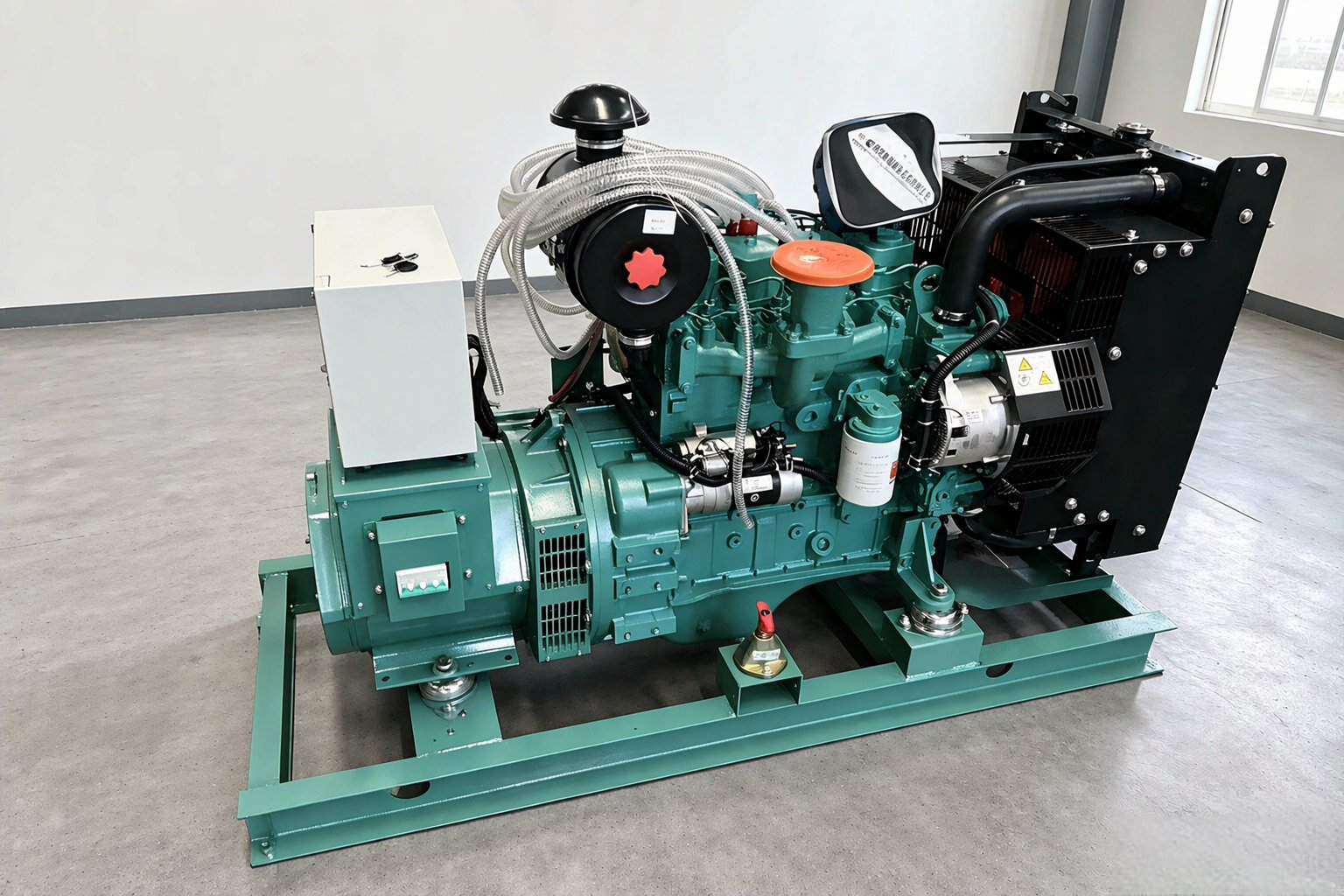
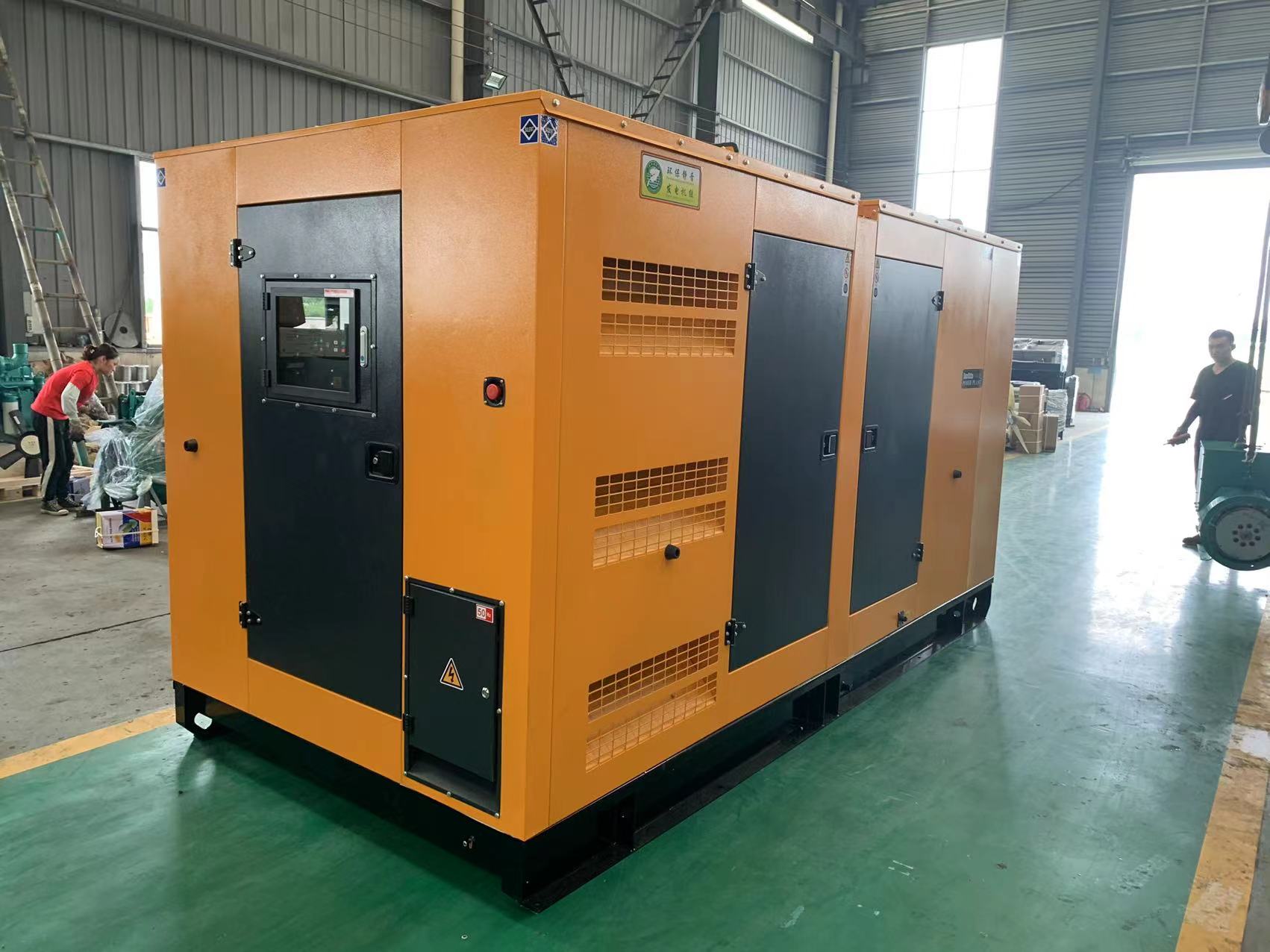
Illustrative generator photo; exact enclosure, frequency and configuration may differ from the model discussed.
Size the genset around the real load
A generator that appears adequate based only on the total connected kW may not suit the site’s operating profile. Prepare a load schedule before choosing a model. Include each major item of equipment, its normal running demand, starting or transient demand, operating sequence, and whether it is essential or non-essential. Have the project’s electrical engineer review the calculations and the expected simultaneous load.
Also identify how the generator will be used. A prime-power requirement and a standby-power requirement are not interchangeable simply because a model lists both ratings. Tell the manufacturer whether the unit is intended for regular operation, backup, or another duty, and ask for confirmation of the applicable rating and operating limits for that use. Do not size a project around a standby figure if the planned duty requires prime power.
Allow the design team to assess load growth and the consequences of a trip or overload. If loads will be added later, state the expected additions at the inquiry stage. If several gensets or other power sources are part of the design, request engineering confirmation of the proposed arrangement rather than assuming that an individual unit rating establishes system capacity.
Confirm frequency, voltage and connection details
Frequency and voltage need to match the project specification and connected equipment. The listed models above are 50 Hz products, but that alone does not establish suitability for a particular site. For an Indonesian procurement, ask the electrical consultant or facility engineer to confirm the required frequency, nominal voltage, phase configuration and any acceptable tolerances. Do not assume a 50 Hz model is appropriate if the project documents specify something different.
Voltage varies among the examples: several models list 400/230V, KC-P160 lists 230/400V, and KC-YC3000 lists 380/220V. Confirm the exact output voltage and connection arrangement on the selected model’s technical documents. Many examples specify a three-phase, four-wire, Y connection, but verify this for the actual unit and project. The product data does not provide kVA ratings for these models, so request the required kVA information and power-factor basis where the consultant’s calculations or tender documents require them.
For projects with motors, pumps, compressors or other equipment that changes load quickly, share the load sequence and starting method with the supplier. Request an engineering review of transient requirements and the offered control and alternator configuration. This is more useful than comparing headline kW ratings without considering what the generator must start and operate.
Compare engine and alternator configuration
The listed gensets pair different diesel engines with KCI alternators. For example, the 64 kW KC-W64Y88 combines a WP4.1D80E200 engine with a KCI-64 alternator, while the 650 kW KC-C650 combines a KTA38-G2E engine with a KCI-650 alternator. The 160 kW KC-P160 uses a Perkins 1106A-70TAG4 engine and KCI-160 alternator. These examples illustrate why procurement teams should compare complete model configurations, not engine brand or power rating in isolation.
Several product records describe a brushless, three-phase AC synchronous alternator with AVR (automatic voltage regulator), self-excited excitation and IP23 protection class. Other listed details include H-class insulation and copper windings. Check the selected model’s own datasheet for these features; specifications should not be generalized across every product. Ask the supplier to identify any deviations in the offered configuration and to provide the technical documents needed for design review.
The product data also lists China Stage II emission for some models and China Stage III for others. These labels describe the listed product information and do not establish acceptance for a project in Indonesia. Before selection, confirm the applicable emissions documentation, approvals and any project-specific requirements with the relevant project stakeholders and supplier.
Plan the installation, access and operating environment
A genset’s physical dimensions, weight, cooling arrangement and acoustic requirements affect the site plan. The product records include model-specific dimensions and weights, but these should be checked against the offered configuration and installation drawings. Confirm access routes, lifting and handling arrangements, foundation or support requirements, ventilation, exhaust routing, fuel-system interfaces and maintenance clearances with the project team. These installation details are not fully specified for every model in the product information.
Noise information also needs careful review. The product records list a noise figure of 102db at LP7M for the examples, but the information does not provide enough context to establish the measurement method, site conditions or whether an enclosure is included. If noise limits matter to the project, request the applicable test details and a configuration proposal suitable for the site. Do not infer soundproof-canopy performance from a noise figure alone.
Cooling arrangements in several listed products are described as closed water circulation with forced-air cooling. Check the selected unit’s technical submittal and confirm that the proposed installation environment and cooling provisions are suitable. For indoor installations, coordinate airflow, heat rejection and exhaust planning with the facility design team.
Relevant application examples
Anonymized case records show gensets used in the factory logistics industry at 250 kW and 600 kW. One 600 kW case records a Yuchai engine model YC6TD1000-D31; another 600 kW case does not identify an engine brand or model. A separate 250 kW case does not identify a brand or model. These examples can help frame discussions about industrial power requirements, but they are not proof that a particular unit is suitable for a new project. [C1] [C2] [C3]
For a facility, EPC or distributor inquiry, use the application context to describe the load and operating role rather than treating a case rating as a ready-made recommendation. Share the site’s load list, duty profile, required electrical output and installation constraints, then request a model proposal against those inputs.
Prepare a complete procurement inquiry
A well-prepared inquiry helps the manufacturer respond against the actual project specification. Include:
- Required prime power and standby power, if both are relevant, with the intended operating duty.
- Required frequency, voltage, phase and connection arrangement, as stated in the project documents.
- Load schedule, largest motor or other starting loads, operating sequence and expected future additions.
- Applicable emissions, certification and documentation requirements for the project, for confirmation by the supplier.
- Installation location details relevant to space, access, cooling, exhaust, noise and handling.
- Required control, monitoring, transfer or integration interfaces, if defined by the project design.
- Requested technical submittals, including the model-specific datasheet, dimensions, weight and any missing electrical ratings.
For Indonesian projects, ask the supplier to confirm in writing whether the proposed model can be configured to meet the project’s specified electrical and documentation requirements. Also confirm quotation validity, commercial terms, delivery arrangements, commissioning scope, spare parts, warranty and local service arrangements directly with the supplier; these details are not established by the product specifications listed here.
To request a proposal, send your project load schedule, required prime and standby ratings, frequency and voltage, site conditions and procurement documentation requirements. Ask for a model-specific technical offer and identify any items that require engineering or regulatory confirmation before purchase.
FAQ
What causes black smoke from a diesel generator set?
Black smoke indicates incomplete combustion. Possible causes include a clogged air filter restricting intake air, excessive fuel injection, poor injector atomization, a sudden excessive load, or poor-quality diesel. Clean the air filter, use good-quality diesel, check the fuel-injection system and avoid prolonged operation under excessive load.
After an automatic shutdown, how can I tell whether protection was triggered or hardware has failed?
First check the controller’s fault-code history. If overspeed, high temperature or low oil pressure protection was triggered, manually reset the protection. If there is no fault code, check the battery and fuel system.
Why might a brushless generator have no voltage output after being stopped for a while?
The generator may have lost residual magnetism. Flashing can restore it. Windings can lose magnetism more readily in damp conditions, so keep the generator room dry.
What are the routine maintenance intervals and tasks for a generator set?
For a new unit, perform the first service after 50 hours, changing the engine oil, oil filter and fuel filter. Routine service is every 200–250 hours: change the oil and three filters; check the belt, coolant, battery, piping and fasteners; and clean the air filter and radiator. Carry out a full-unit inspection annually.
What should I check if a generator set overheats or shuts down on a high-temperature alarm?
Check the coolant level, radiator blockage, fan speed, thermostat and water-pump operation. Clean the radiator cooling system and address blockages or restricted coolant circulation.
Stay Updated with Our News
Subscribe to our newsletter for the latest industry insights and product updates.