
Generator Set Manufacturer: Specs & Selection Guide
Generator Set Manufacturer: Specs & Selection Guide
If you are evaluating a generator set manufacturer for a project in Russia, start by matching the genset’s prime or standby rating, frequency and voltage to the intended duty and site requirements. The diesel models described here cover 20 kW to 3,000 kW, with listed configurations at 50 Hz and several voltage options. Use these specifications as a starting point—not as confirmation that a particular model meets your project requirements. Confirm the required electrical configuration, emissions documentation and installation details before requesting a quotation.
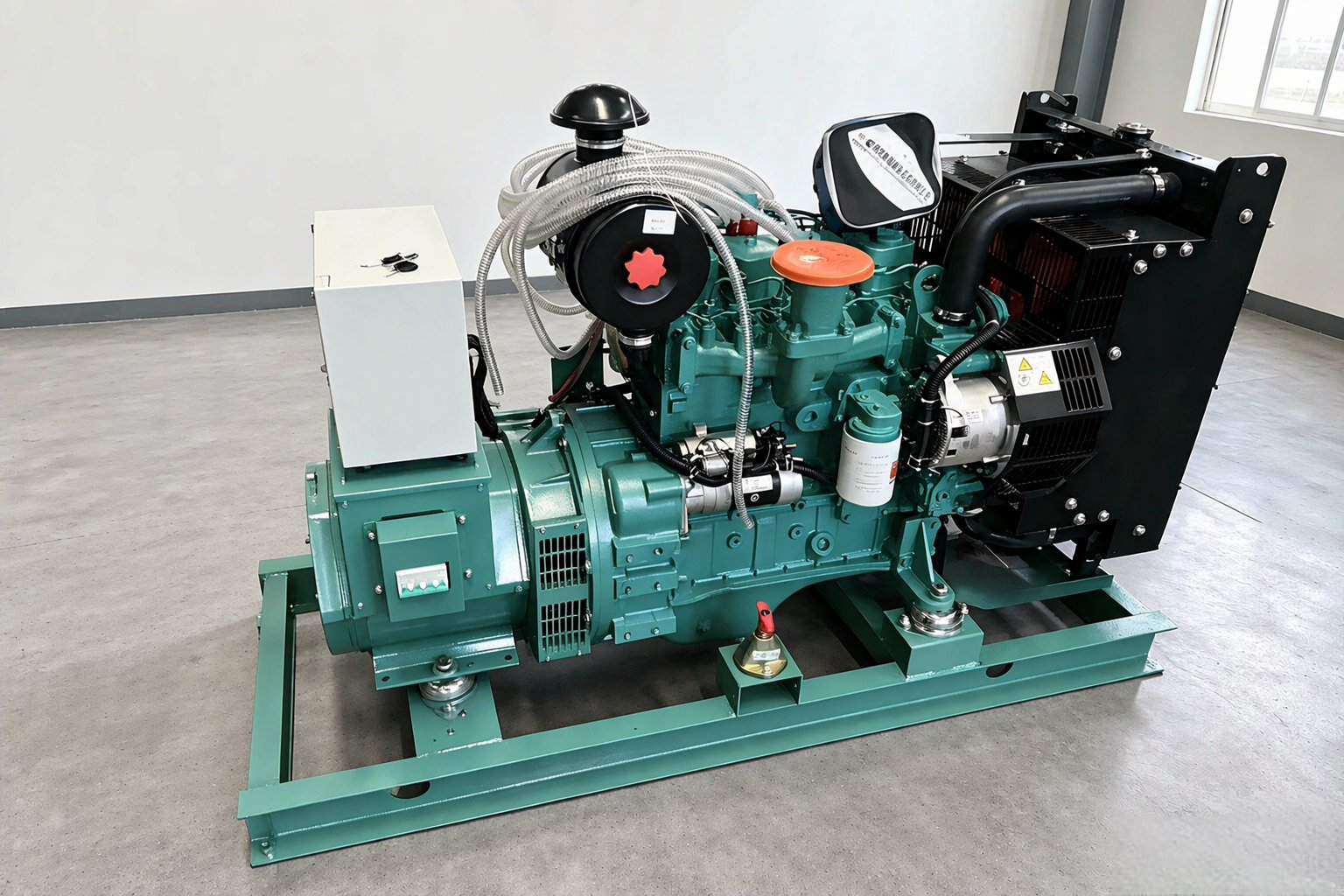
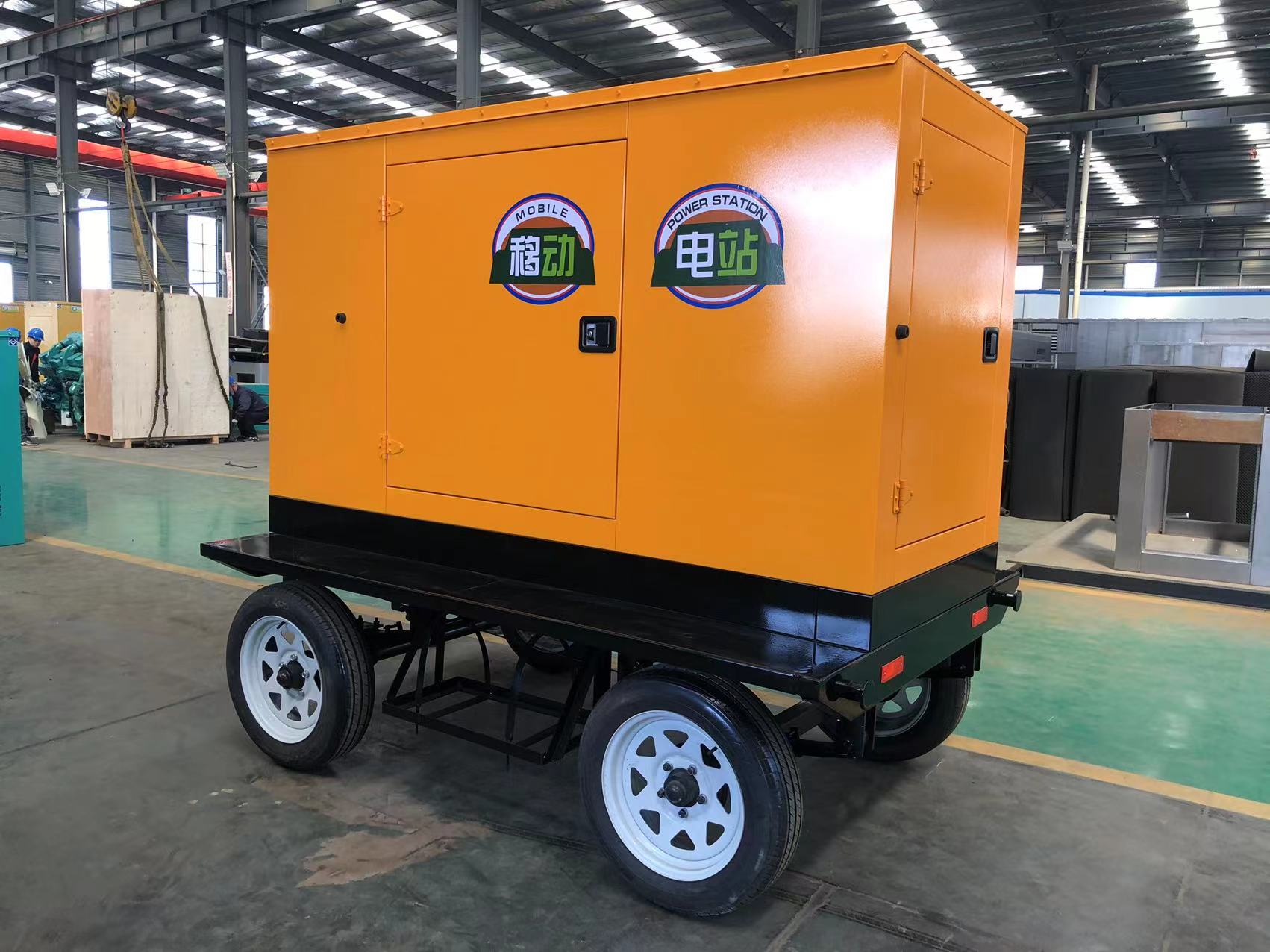
Illustrative generator photo; exact enclosure, frequency and configuration may differ from the model discussed.
What to check when comparing a generator set manufacturer
For procurement teams, distributors, EPC contractors and facility engineers, a useful comparison begins with a clear technical basis. Ask suppliers to quote against the same load schedule and operating assumptions so that ratings and configurations can be compared consistently.
- Duty and rating: Establish whether the unit will provide prime power or standby power. The products below state both ratings; make sure the rating relevant to your intended duty is used for selection.
- Connected load: Provide the equipment list, expected simultaneous loads and any large loads that start or change frequently. Ask the supplier to assess the required capacity against this load information rather than selecting from one total alone.
- Frequency and voltage: The listed examples are mainly 50 Hz. Voltage configurations include 400/230V, 230/400V and 380/220V. Confirm which voltage notation and connection arrangement your project requires.
- Installation constraints: Share the available footprint, access route, expected operating location and any enclosure or sound requirements. The product details include dimensions and weights for some models, but do not specify every installation option.
- Documentation and local acceptance: Ask what emissions information, technical documents and other evidence can be supplied for the exact model. Confirm applicable Russian project and site requirements with your engineering and compliance teams.
This information helps suppliers respond to the actual project rather than an assumed configuration. For a distributor or EPC tender, include the requested rating basis, voltage, frequency, load profile and required delivery scope in the inquiry.
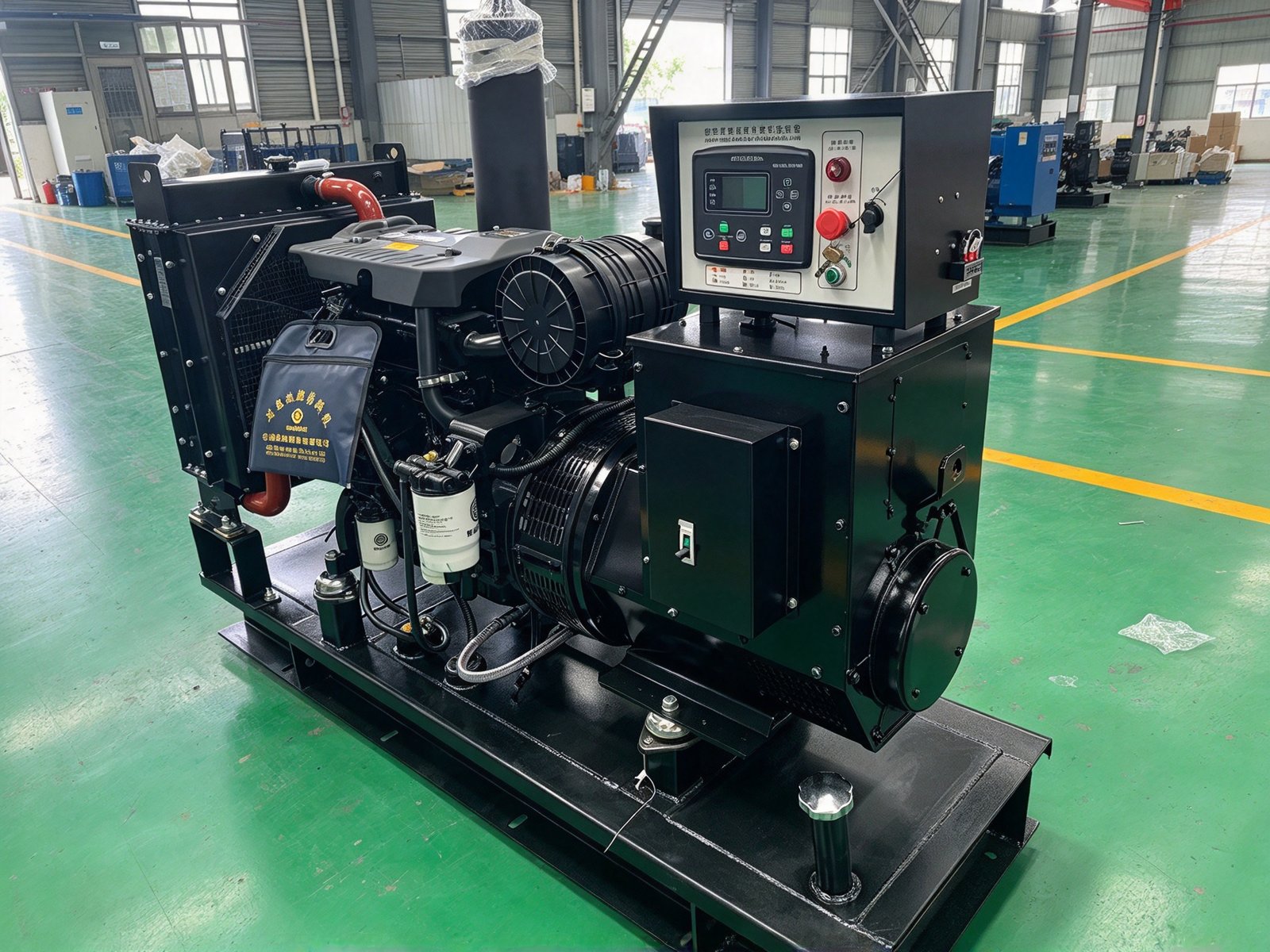
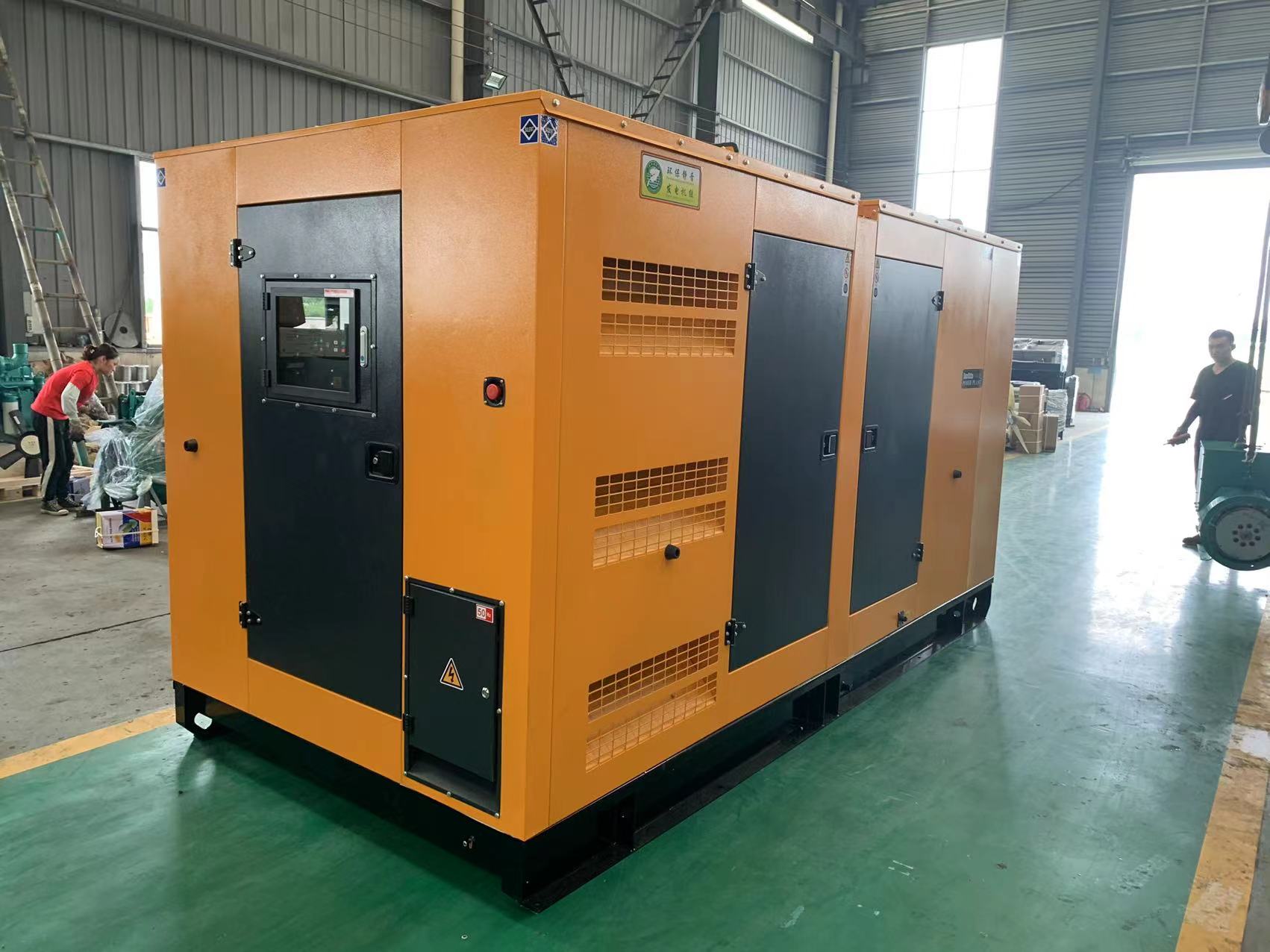
Illustrative generator photo; exact enclosure, frequency and configuration may differ from the model discussed.
Diesel generator set manufacturer range: example capacities and configurations
The following examples illustrate the available capacity range and selected configurations. Ratings are stated in kW because kVA figures are not provided in these specifications. Do not convert or compare kW and kVA without confirming the applicable power factor and rating basis with the supplier.
- KC-DC20G: 20 kW prime power and 22 kW standby power; 50 Hz, 400/230V; 4B3.9-G1 diesel engine and KCI-20 alternator. The data lists mechanical governing and China Stage II emission.
- KC-W64Y88: 64 kW prime and 70 kW standby; 50 Hz, 400/230V; WP4.1D80E200 diesel engine and KCI-64 alternator. The data lists electronic governing and China Stage II emission.
- KC-P160: 160 kW prime and 176 kW standby; 50 Hz, 230/400V; 1106A-70TAG4 diesel engine and KCI-160 alternator. The listed power factor is 0.8 lagging; no emission category is specified in the supplied details.
- KCV-282GF: 282 kW prime and 310 kW standby; 50 Hz, 400/230V; TAD1342GE-B diesel engine and KCI-282 alternator. The data lists China Stage II emission.
- KC-450: 450 kW prime and 500 kW standby; 50 Hz, 400/230V; KCV550 diesel engine and KCI-450 alternator. Its listed power factor is 0.8 lagging, and its emission category is China Stage II.
- KC-C650: 650 kW prime and 700 kW standby; 50 Hz, 400/230V; KTA38-G2E diesel engine and KCI-650 alternator. The data lists China Stage III emission.
- KC-S1118: 1,118 kW prime and 1,229.8 kW standby; 50 Hz, 400/230V; 6WTAA35-G313 diesel engine and KCI-1118 alternator. The data lists China Stage III emission.
- KC-YC3000: 3,000 kW prime and 3,300 kW standby; 50 Hz, 380/220V; YC16VC4900-D30 diesel engine and KCI-3000 alternator. Its stated dimensions and weight are identified as reference values, and its emission category is China Stage III.
These examples show different engine and alternator models, capacities and voltage configurations. They do not establish that every model can be supplied with the same options. Request a model-specific datasheet and a written configuration confirmation for the proposed unit.
Sizing: distinguish prime power from standby power
A generator should be selected against the duty it is expected to perform. If it is intended to supply power for ongoing or variable operation, ask the supplier to evaluate the prime-power rating against your anticipated load profile. If it is intended for backup, clarify that standby duty is the basis of the proposal. The listed standby rating is higher than the prime rating on these examples, but that does not mean the standby figure should be used for continuous operation.
Give the supplier more than a single peak-load number. A useful inquiry can include the normal operating load, the maximum expected load, equipment that may operate at the same time, and any large motors or other loads with starting events. Ask the supplier to state which rating and assumptions support its proposed capacity. If the load schedule is incomplete, identify estimates clearly and request confirmation before finalizing the selection.
For multi-unit or critical-site projects, describe the intended operating arrangement and ask whether the proposed scope covers the required equipment and controls. The available product information does not specify parallel operation, automatic transfer equipment or control-panel options, so these should be confirmed separately rather than assumed.
Frequency and voltage: confirm the complete electrical match
A nominal frequency alone does not confirm electrical compatibility. Most of the examples listed here are 50 Hz, but the voltage differs: several models specify 400/230V, the KC-P160 lists 230/400V, and the KC-YC3000 lists 380/220V. Confirm the required voltage, phase arrangement, connection and output current for the exact site design. The product details list three-phase, four-wire, Y-connected output for several models, but the precise configuration should be verified for the selected unit.
For Russia-based projects, treat the country context as a reason to confirm requirements—not as proof that a listed configuration is compliant. Send the project’s required frequency and voltage, and ask the supplier to confirm the proposed model’s output and documentation. If your project requires a different electrical configuration or an alternative frequency, state that clearly in the inquiry; do not assume a conversion or dual-frequency option is available.
Installation and operating information to request
The product details include some physical and operating specifications, but not a complete installation package. For instance, the KC-DC20G is listed at 1,700 × 750 × 1,100 mm and 750 kg, while the KC-C650 is listed at 4,300 × 1,700 × 2,450 mm and 7,500 kg. Use such figures for preliminary planning only, and confirm the final unit dimensions, weight and required clearances for the offered configuration.
Several examples list an IP23 protection class, H-class insulation, a brushless three-phase synchronous alternator and AVR (automatic voltage regulator). These are model-specific details, not a blanket specification for every capacity. Ask for the complete datasheet for the selected model and clarify whether the proposed package needs a soundproof canopy, an open-frame arrangement, additional protection or other site adaptations. Enclosure options and their performance are not specified here.
Also request the information needed for your operating plan, including fuel consumption at stated loads, service consumables, maintenance requirements and any recommended spare parts. Some models list fuel consumption, but the figures are not a substitute for a project-specific operating estimate. Confirm what is included in the quoted supply scope, since installation, commissioning, fuel systems and transfer equipment are not detailed in the available specifications.
Application references and project inquiry
Anonymous project references include generator sets for factory and logistics applications at 250 kW and 600 kW. One 600 kW reference identifies a Yuchai YC6TD1000-D31 generator set. Customer names and identifying locations are not disclosed. These examples provide limited context on equipment used in the industry; they should not be read as a guarantee of suitability for another site or as confirmation of performance beyond the stated power and equipment details.
To request a proposal, send your required prime and standby ratings, load schedule, frequency, voltage, site location, installation constraints and intended duty. Include emissions and documentation requirements for the project, and ask the supplier to confirm the exact model, engine, alternator, dimensions, weight and electrical output in writing. If you are a distributor or EPC contractor, specify the quantity, requested scope and any tender documentation needed. A project-specific review can then identify which listed configuration merits further evaluation and which technical details still need confirmation.
FAQ
Why is a diesel generator set producing black smoke?
Black smoke indicates incomplete combustion. Possible causes include a blocked air filter restricting intake air, excessive fuel injection, poor injector atomization, a sudden excessive load or poor-quality diesel. Clean the air filter, use good-quality diesel, inspect the fuel-injection system and avoid prolonged operation under excessive load.
After an automatic shutdown, how can I tell whether a generator set has a protection trip or hardware damage?
First check the controller’s fault-code history. If overspeed, high-temperature or low-oil-pressure protection has been triggered, manually reset the protection after addressing the cause. If there is no fault code, check the battery and fuel system.
Why might a brushless generator have no voltage output after being stopped for a while?
The generator may have lost residual magnetism. Magnetization can restore it. Windings in a damp environment can lose magnetism more easily, so keep the generator room dry.
How often should a generator set receive routine maintenance, and what should be checked?
The stated schedule is an initial service after 50 hours, including oil, oil-filter and fuel-filter changes. Routine service is every 200–250 hours: change the oil and three filters; check the belt, coolant, battery, piping and fasteners; and clean the air filter and radiator. Carry out a full-machine inspection annually.
What should I check if a generator set has high coolant temperature or shuts down on a high-temperature alarm?
Check the coolant level, radiator blockage, fan speed, thermostat and water-pump operation. Clean the radiator cooling system and address blockages or poor coolant circulation.
Stay Updated with Our News
Subscribe to our newsletter for the latest industry insights and product updates.