
Diesel Genset for Sale | 20–3,000 kW Options
Diesel Genset for Sale | 20–3,000 kW Options
If you are sourcing a diesel genset for sale for a facility, project or distribution business in Malaysia, start by matching the generator set’s prime or standby rating to the intended duty, then confirm frequency, voltage, load profile and installation requirements. The product examples below cover 20 kW to 3,000 kW prime power, with listed ratings at 50 Hz. They provide a starting point for shortlisting—not a substitute for checking that a specific model suits your site and electrical system.
For procurement teams, the key decision is not simply which unit has the largest output. A properly specified genset should align with the loads it must supply, the hours and conditions in which it will operate, and the electrical connection required at the facility. Use the model data here to identify a likely rating range, then request confirmation of the exact configuration and project fit.
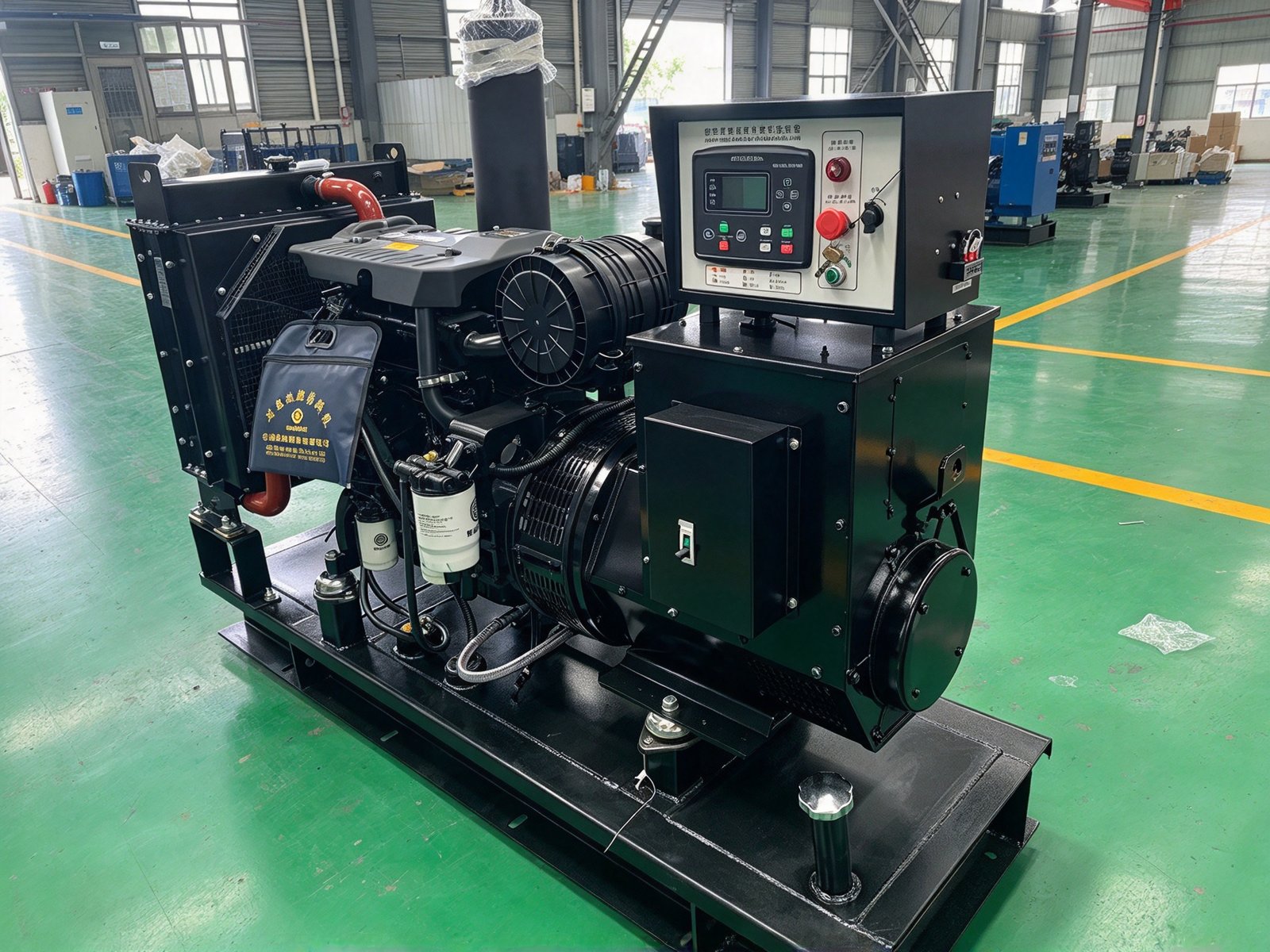
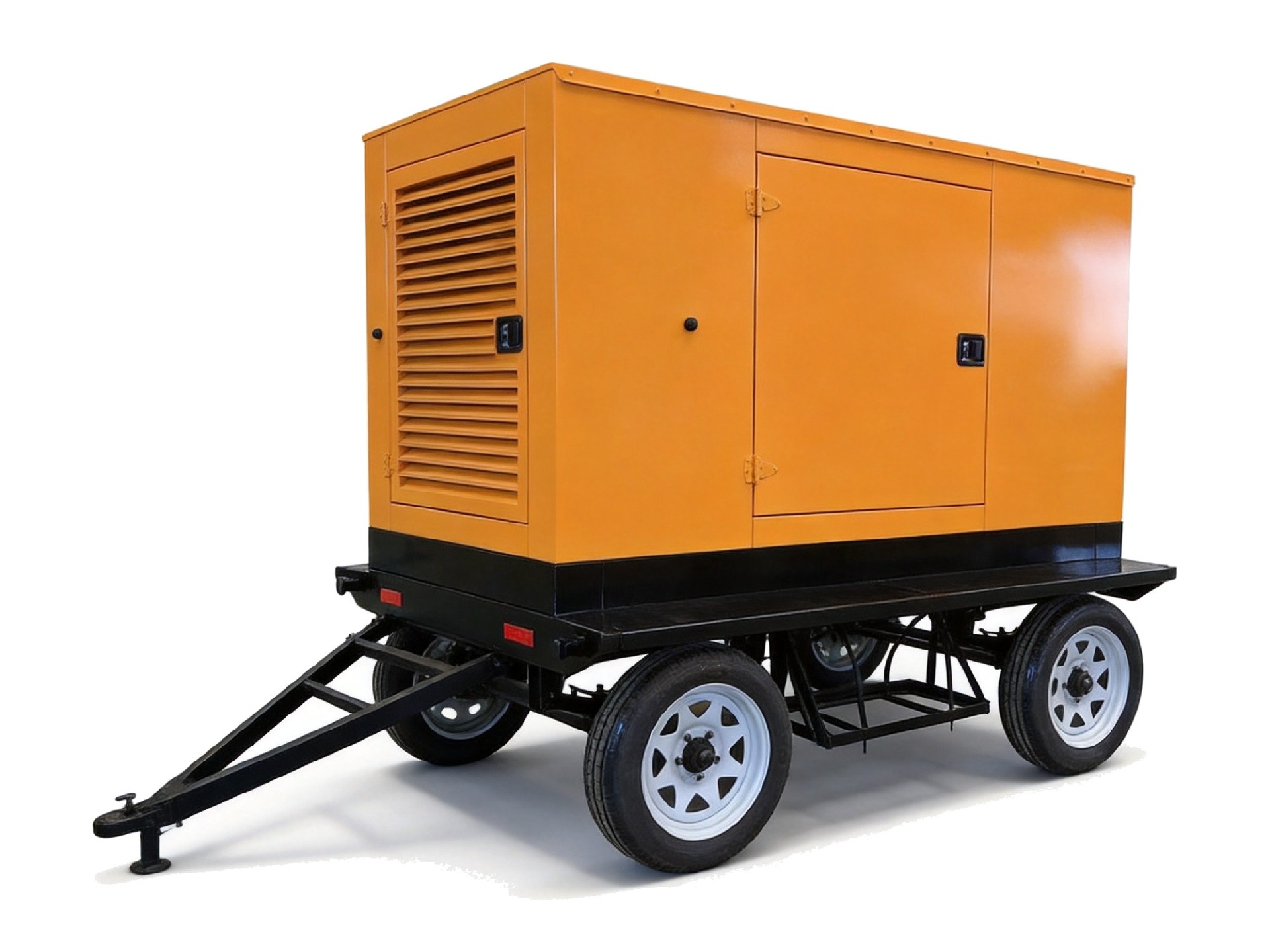
Illustrative generator photo; exact enclosure, frequency and configuration may differ from the model discussed.
Diesel genset for sale: example models and ratings
The following products show the range of listed ratings. Prime and standby values are given in kW; the product data does not provide kVA ratings for these models.
- KC-DC20G: 20 kW prime power and 22 kW standby power; 50 Hz; 400/230 V; 4B3.9-G1 diesel engine; mechanical governor.
- KC-W64Y88: 64 kW prime power and 70 kW standby power; 50 Hz; 400/230 V; WP4.1D80E200 diesel engine; electronic governor.
- KC-P160: 160 kW prime power and 176 kW standby power; 50 Hz; 230/400 V; 1106A-70TAG4 diesel engine.
- KCV-282GF: 282 kW prime power and 310 kW standby power; 50 Hz; 400/230 V; TAD1342GE-B diesel engine.
- KC-450: 450 kW prime power and 500 kW standby power; 50 Hz; 400/230 V; KCV550 diesel engine.
- KC-C650: 650 kW prime power and 700 kW standby power; 50 Hz; 400/230 V; KTA38-G2E diesel engine.
- KC-S1118: 1,118 kW prime power and 1,229.8 kW standby power; 50 Hz; 400/230 V; 6WTAA35-G313 diesel engine.
- KC-YC3000: 3,000 kW prime power and 3,300 kW standby power; 50 Hz; 380/220 V; YC16VC4900-D30 diesel engine.
These are individual product specifications, not a promise that every rating, voltage or engine configuration is available for every project. In particular, the 3,000 kW example is listed at 380/220 V, while several other examples are listed at 400/230 V. Check the exact model data and connection requirements before preparing a purchase order.
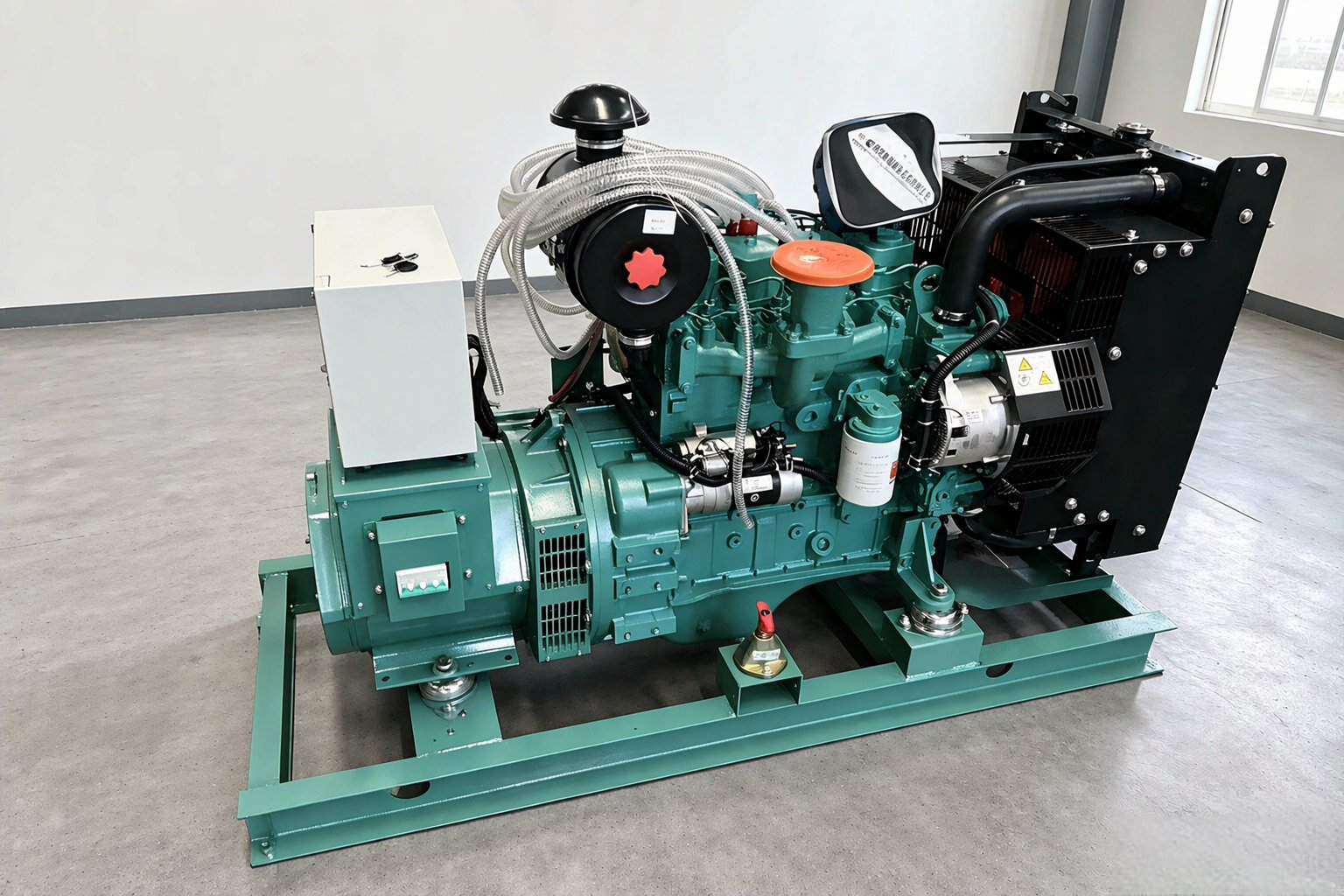
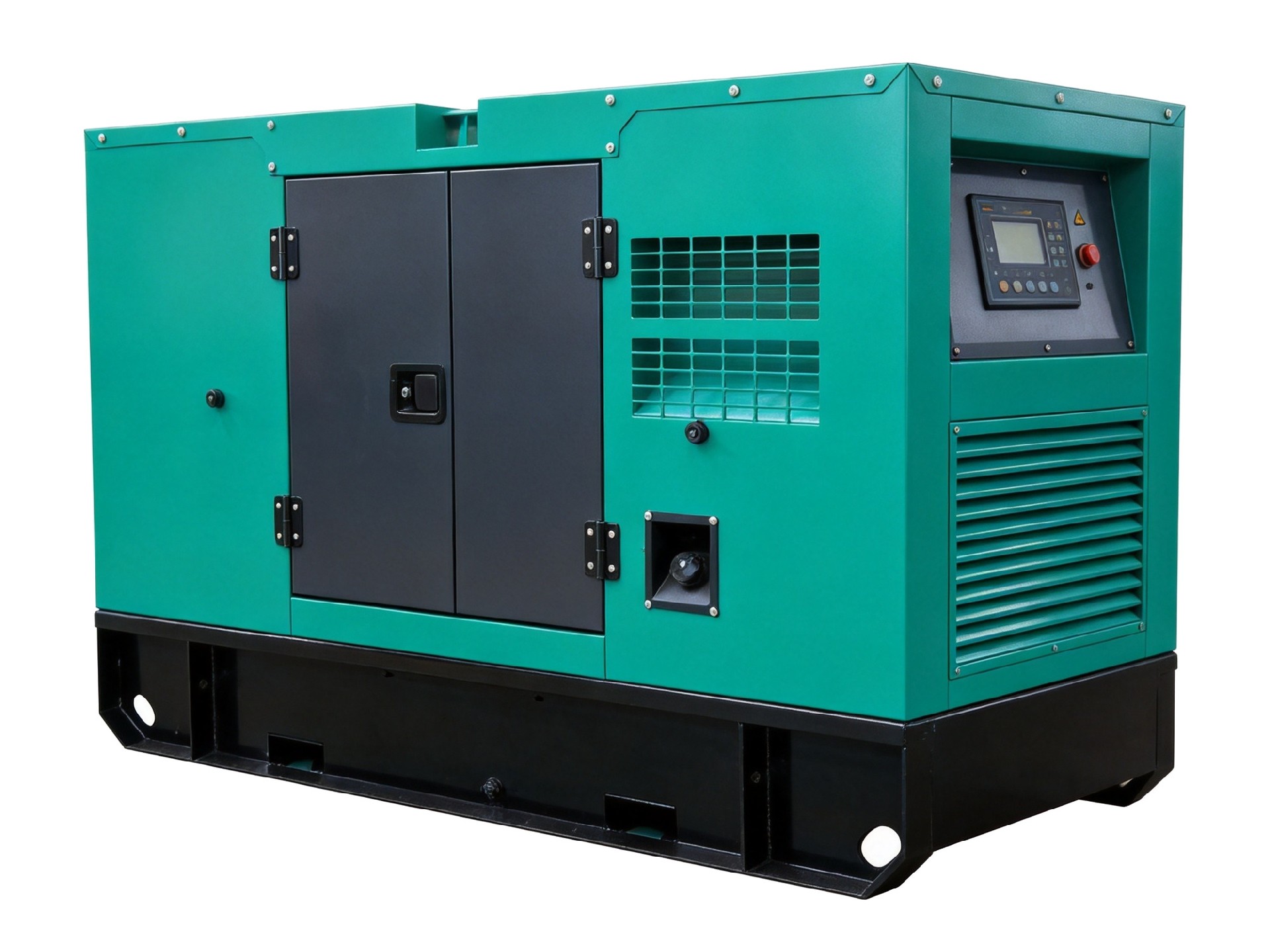
Illustrative generator photo; exact enclosure, frequency and configuration may differ from the model discussed.
Choose the rating around the duty and load
First establish whether the genset is intended for regular power supply or emergency backup. Compare the expected operating duty with the model’s stated prime and standby ratings, and ask the supplier to confirm which rating applies to your planned use. Do not treat the standby figure as an interchangeable substitute for prime power: for example, the KC-450 is listed at 450 kW prime and 500 kW standby, not as a 500 kW prime set.
Build a load schedule before choosing a rating. Include the equipment that must operate together, its running demand, and any loads that start or change during operation. Share that schedule with the supplier so the proposed rating can be checked against the actual operating sequence. If the site has motors or other loads with substantial starting demand, identify them explicitly rather than relying only on the sum of normal running loads. The supplied product data does not provide project-specific sizing calculations.
For a backup installation, define which loads are essential and whether they must run simultaneously. For a genset expected to supply power routinely, explain the planned duty and operating pattern when requesting a recommendation. In either case, ask for the rating basis, any assumptions used in the sizing, and a clear confirmation that the selected prime or standby capacity is appropriate for the application.
Leave room for a review of site conditions and future demand, but avoid choosing an oversized set without a reasoned load assessment. The available information does not state an allowable overload, load-acceptance capability or derating factor for the example units, so obtain model-specific confirmation if those factors matter to your project.
Confirm frequency, voltage and connection
All eight examples above are specified at 50 Hz. Their listed voltages are not identical: most show 400/230 V, the KC-P160 shows 230/400 V, and the KC-YC3000 shows 380/220 V. Verify the required supply voltage, frequency, phase arrangement and connection with the electrical designer or facility team before selection. Do not assume that a model listed at one voltage can be supplied at another without confirmation.
The smaller examples KC-DC20G and KC-W64Y88 specify a three-phase, four-wire Y connection. The KC-P160, KCV-282GF, KC-450, KC-C650, KC-S1118 and KC-YC3000 also list a three-phase, four-wire Y connection. Confirm that this matches the project design and the equipment to be supplied. If the site requires a different frequency or voltage, ask whether a suitable configuration is available; the listed products do not establish that other configurations can be provided.
For Malaysian procurement, treat site and project requirements as items to verify rather than assumptions. Ask the project’s electrical and compliance teams to confirm applicable requirements, then provide those details with the enquiry. The product information listed here does not establish local compliance, approvals or suitability for a particular installation.
Compare equipment details that affect the installation
Once the rating is in range, compare the model details relevant to your plant room, generator area and operating plan. Available product data includes dimensions, weight, alternator, fuel consumption and protection class for the examples below. These figures can support initial layout and technical review, but confirm the final configuration and installation clearances with the supplier and project engineer.
- 20 kW KC-DC20G: 1,700 × 750 × 1,100 mm; 750 kg; KCI-20 alternator; listed fuel consumption 203 g/kW·h; protection class IP23.
- 64 kW KC-W64Y88: 1,700 × 800 × 1,500 mm; 1,180 kg; KCI-64 alternator; listed fuel consumption 209 g/kW·h; protection class IP23.
- 160 kW KC-P160: 2,800 × 950 × 1,450 mm; 2,100 kg; KCI-160 alternator; listed fuel consumption 220 g/kW·h; protection class IP23.
- 282 kW KCV-282GF: 2,700 × 1,700 × 1,600 mm; 2,650 kg; KCI-282 alternator; listed fuel consumption 198 g/kW·h; protection class IP23.
- 450 kW KC-450: 3,550 × 1,500 × 200 mm; 3,700 kg; KCI-450 alternator; listed fuel consumption 200 g/kW·h; protection class IP23.
- 650 kW KC-C650: 4,300 × 1,700 × 2,450 mm; 7,500 kg; KCI-650 alternator; listed fuel consumption 196 g/kW·h; protection class IP23.
- 1,118 kW KC-S1118: 5,000 × 2,200 × 2,500 mm; 9,000 kg; KCI-1118 alternator; listed fuel consumption 200 g/kW·h; protection class IP23.
- 3,000 kW KC-YC3000: 7,000 × 2,800 × 3,400 mm and 22,000 kg, both marked as reference values; KCI-3000 alternator; listed fuel consumption 200 g/kW·h; protection class IP23.
The supplied data lists the KC-450 dimensions as 3,550 × 1,500 × 200 mm. Because overall height and access clearances are important for layout, confirm this dimension with the supplier before using it for a site plan. Fuel-consumption figures are model data; they are not a prediction of a site’s actual fuel use. Ask for the basis of the stated figure and an operating estimate based on your expected load and duty.
The examples specify brushless three-phase synchronous alternators, AVR (automatic voltage regulator), self-excitation and H-class insulation. The KC-DC20G, KC-W64Y88, KC-P160, KCV-282GF, KC-450, KC-C650 and KC-S1118 list copper windings; the KC-C650 specifies pure copper. Confirm any material or alternator requirement against the exact model quotation and technical documentation.
Prepare a complete enquiry for a quote
A useful request for quotation gives the supplier enough detail to assess the application rather than simply returning a model number. Include:
- Required prime and standby capacity, plus the intended operating duty.
- A load list with running demand, starting loads and which items must run at the same time.
- Required frequency, voltage, phase and connection arrangement, confirmed by the project team.
- Site location within Malaysia, installation environment, available access and space constraints.
- Any emissions, noise, enclosure, control, fuel storage or integration requirements that apply to the project.
- Required documentation, inspection or testing details, and the expected project schedule.
Request a model-specific technical proposal that identifies the rating basis, engine and alternator, electrical output, dimensions, weight and any included accessories. If you need an automatic transfer switch, soundproof canopy, remote monitoring, parallel operation or other system components, state that clearly and ask whether they are included or quoted separately. The product details above do not confirm those options.
For procurement managers and EPC contractors, the shortlist can be organized by rating band: 20–64 kW, 160–450 kW, 650–1,118 kW, or 3,000 kW. Facility engineers can use the same bands as a first pass, then validate actual loads, starting conditions and electrical interface. Distributors can share the model data with prospective buyers while clearly labeling each unit’s prime and standby ratings and stated output voltage.
To enquire about a diesel genset for sale, send your required duty, load schedule, voltage and frequency, site constraints and project timeline. Ask for confirmation of the suitable model and a quotation with the exact scope, technical configuration and any items that remain subject to confirmation. This gives your team a practical basis for comparing proposals without assuming that a listed rating or feature automatically meets the project specification.
FAQ
What should I check if a diesel genset produces black smoke?
Black smoke indicates incomplete combustion. Possible causes include a blocked air filter restricting intake, excessive fuel injection, poor injector atomization, a sudden excessive load or poor-quality diesel. Check and clean the air filter, use suitable diesel, inspect the injection system and avoid prolonged operation under excessive load.
What should I do if the genset stops and will not restart?
Check the controller’s fault-code history first. If overspeed, high-temperature or low-oil-pressure protection has activated, reset the protection manually after addressing the cause. If there is no fault code, check the battery and fuel system.
Why might a brushless alternator have no voltage output after being idle?
The alternator may have lost residual magnetism, which can be restored by magnetization. In damp environments, winding moisture can contribute to loss of magnetism; keep the generator room dry.
What are the stated routine maintenance intervals?
The guidance specifies an initial service at 50 hours, including changing the engine oil, oil filter and fuel filter. Routine maintenance is stated at every 200–250 hours, including oil and filter changes and checks of the belt, coolant, battery, piping and fasteners, plus cleaning the air filter and radiator. A full-unit inspection is specified annually.
Stay Updated with Our News
Subscribe to our newsletter for the latest industry insights and product updates.