
Generator Sets: Sizing and 50 Hz Model Options
Generator Sets: Sizing and 50 Hz Model Options
Generator sets for an Indonesia project should be selected against the site’s actual load, required duty, frequency and voltage—not simply the largest kilowatt figure in a catalogue. The diesel models detailed here range from 20 kW to 3,000 kW prime power, with listed standby ratings from 22 kW to 3,300 kW. The specifications provided are for 50 Hz models; confirm the required electrical configuration, applicable emissions approval and intended operating conditions before requesting a quotation.
For procurement teams, distributors, EPC contractors and facility engineers, the first step is to define the load and operating role. Then compare prime and standby ratings, check the voltage and frequency against the site design, and verify installation constraints such as dimensions, weight and acoustic requirements. The models below offer reference points across several power bands without implying that one rating or configuration suits every project.
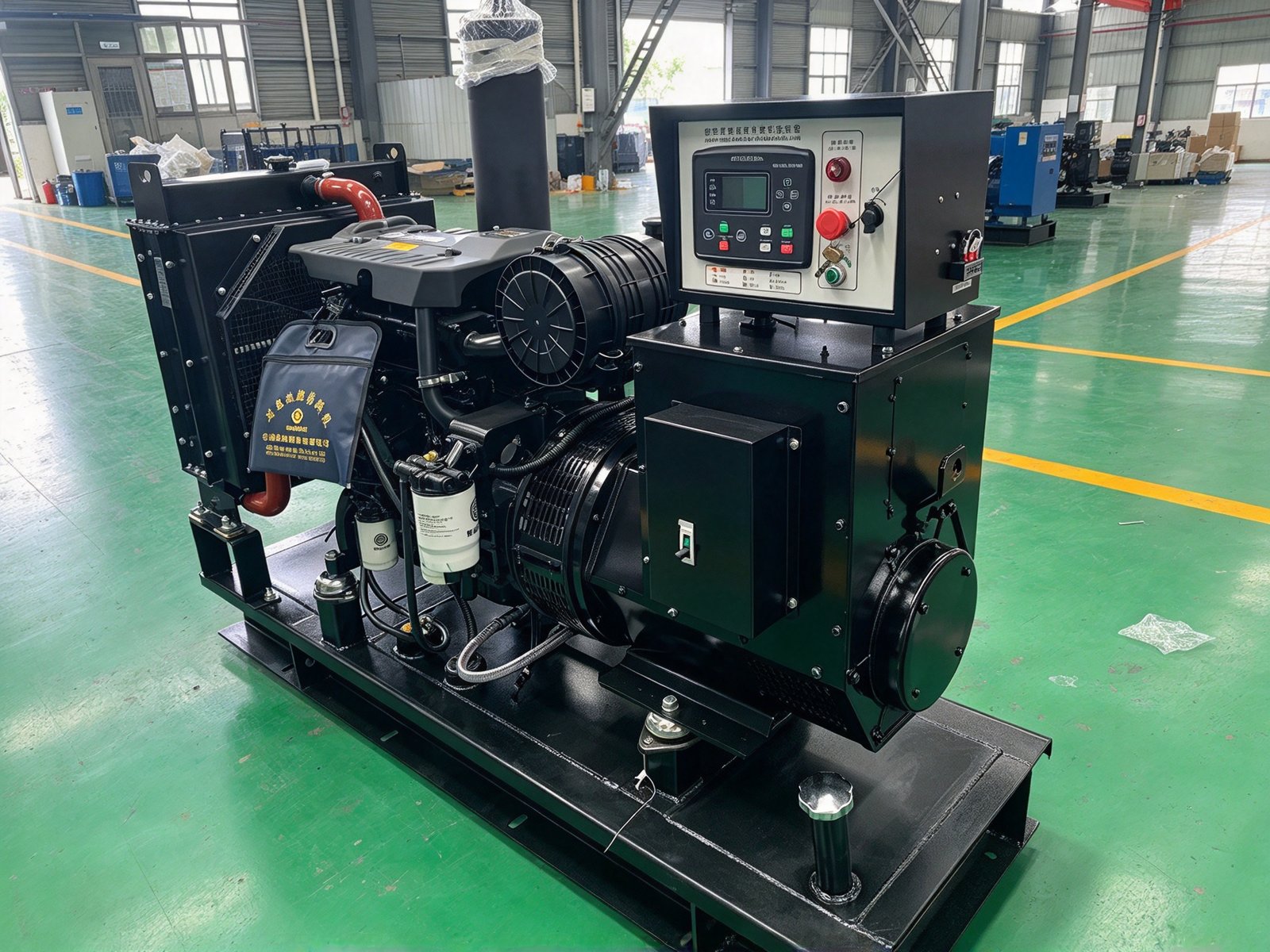
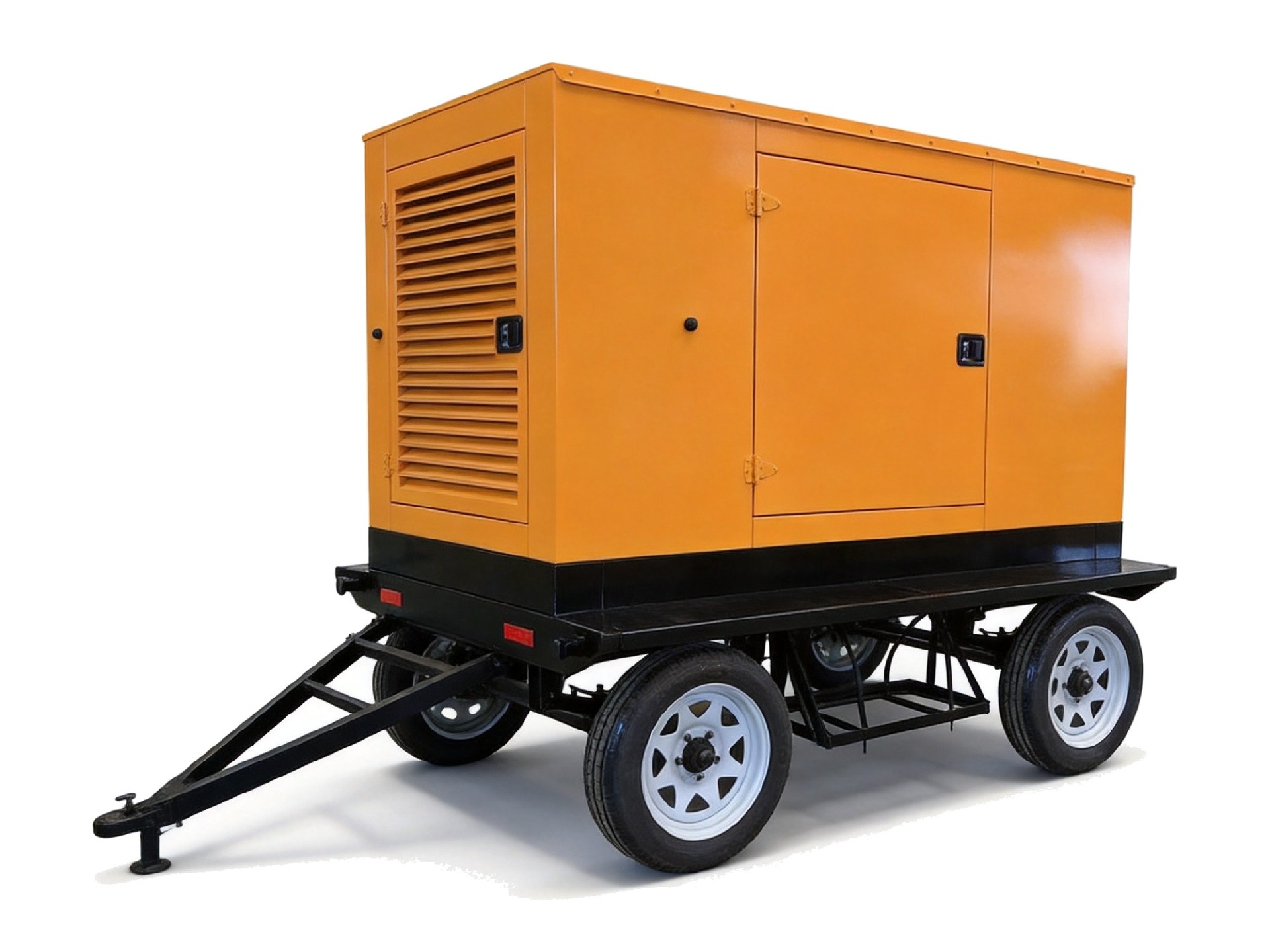
Illustrative generator photo; exact enclosure, frequency and configuration may differ from the model discussed.
Generator sets in the available 50 Hz range
The following examples show the span of documented diesel generator sets. Prime and standby ratings are listed as stated in the specifications; do not treat the standby figure as the normal operating rating without confirming the project duty and the applicable rating definitions.
- KC-DC20G: 20 kW prime / 22 kW standby; 50 Hz; 400/230 V. It uses a 4B3.9-G1 diesel engine and KCI-20 alternator. The listed speed is 1500 rpm, and the set has mechanical governing and AVR voltage regulation. (P1)
- KC-W64Y88: 64 kW prime / 70 kW standby; 50 Hz; 400/230 V. It uses a WP4.1D80E200 diesel engine and KCI-64 alternator, with electronic governing and AVR. (P2)
- KC-P160: 160 kW prime / 176 kW standby; 50 Hz; 230/400 V. Its listed equipment includes a Perkins 1106A-70TAG4 diesel engine and KCI-160 alternator. (P3)
- KCV-282GF: 282 kW prime / 310 kW standby; 50 Hz; 400/230 V. It uses a TAD1342GE-B diesel engine and KCI-282 alternator. (P4)
- KC-450: 450 kW prime / 500 kW standby; 50 Hz; 400/230 V, with a KCV550 diesel engine and KCI-450 alternator. (P5)
- KC-C650: 650 kW prime / 700 kW standby; 50 Hz; 400/230 V. The listed engine is a KTA38-G2E, paired with a KCI-650 alternator. (P6)
- KC-S1118: 1,118 kW prime / 1,229.8 kW standby; 50 Hz; 400/230 V, with a 6WTAA35-G313 diesel engine and KCI-1118 alternator. (P7)
- KC-YC3000: 3,000 kW prime / 3,300 kW standby; 50 Hz; 380/220 V. It is listed with a YC16VC4900-D30 diesel engine and KCI-3000 alternator. (P8)
These are individual configurations, not a statement that every rating is available with the same voltage, engine, emissions specification or options. In particular, the 3,000 kW model is listed at 380/220 V, while several other examples are listed at 400/230 V. Match the model data to the project’s single-line diagram and confirm the exact requested configuration before placing an order.
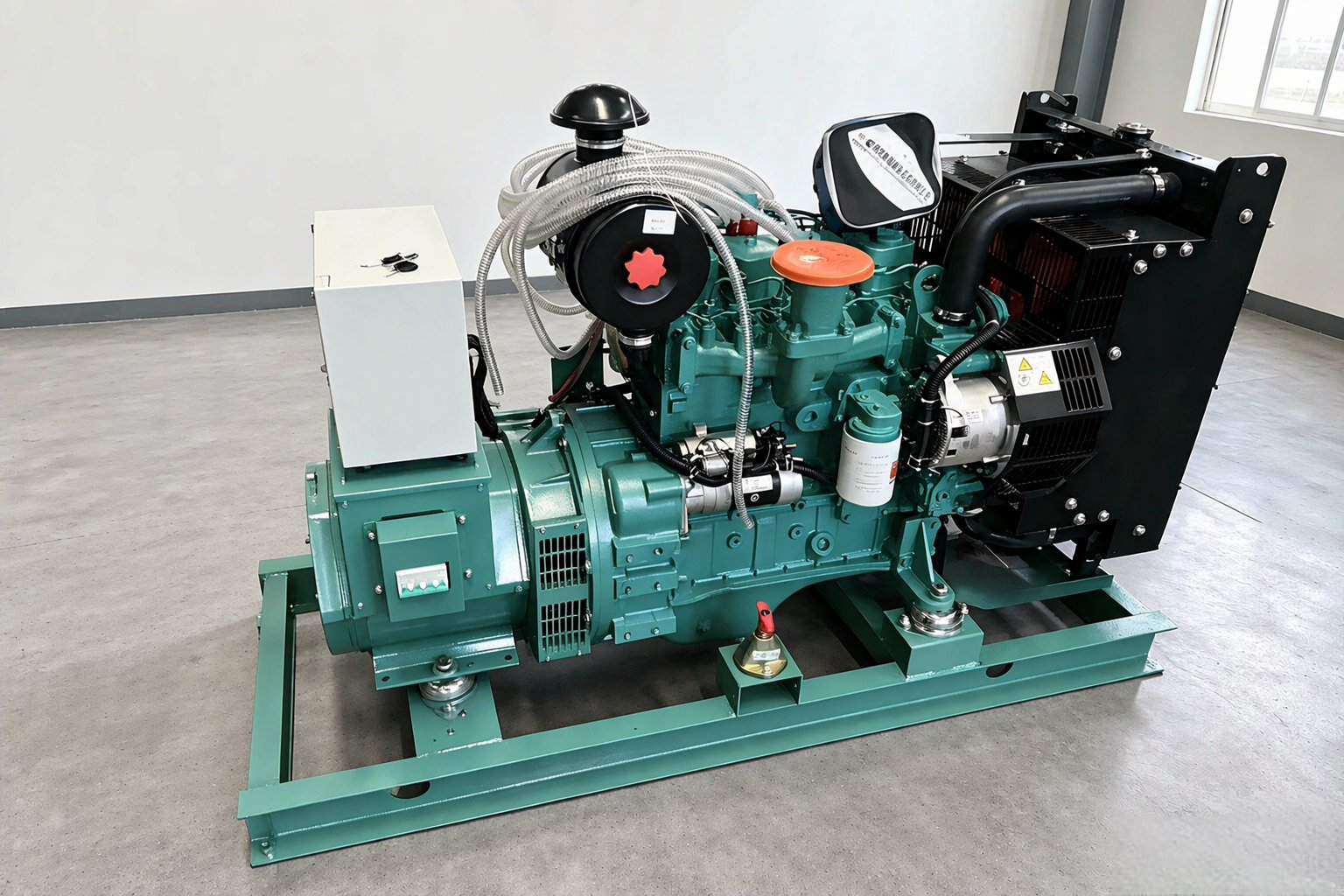
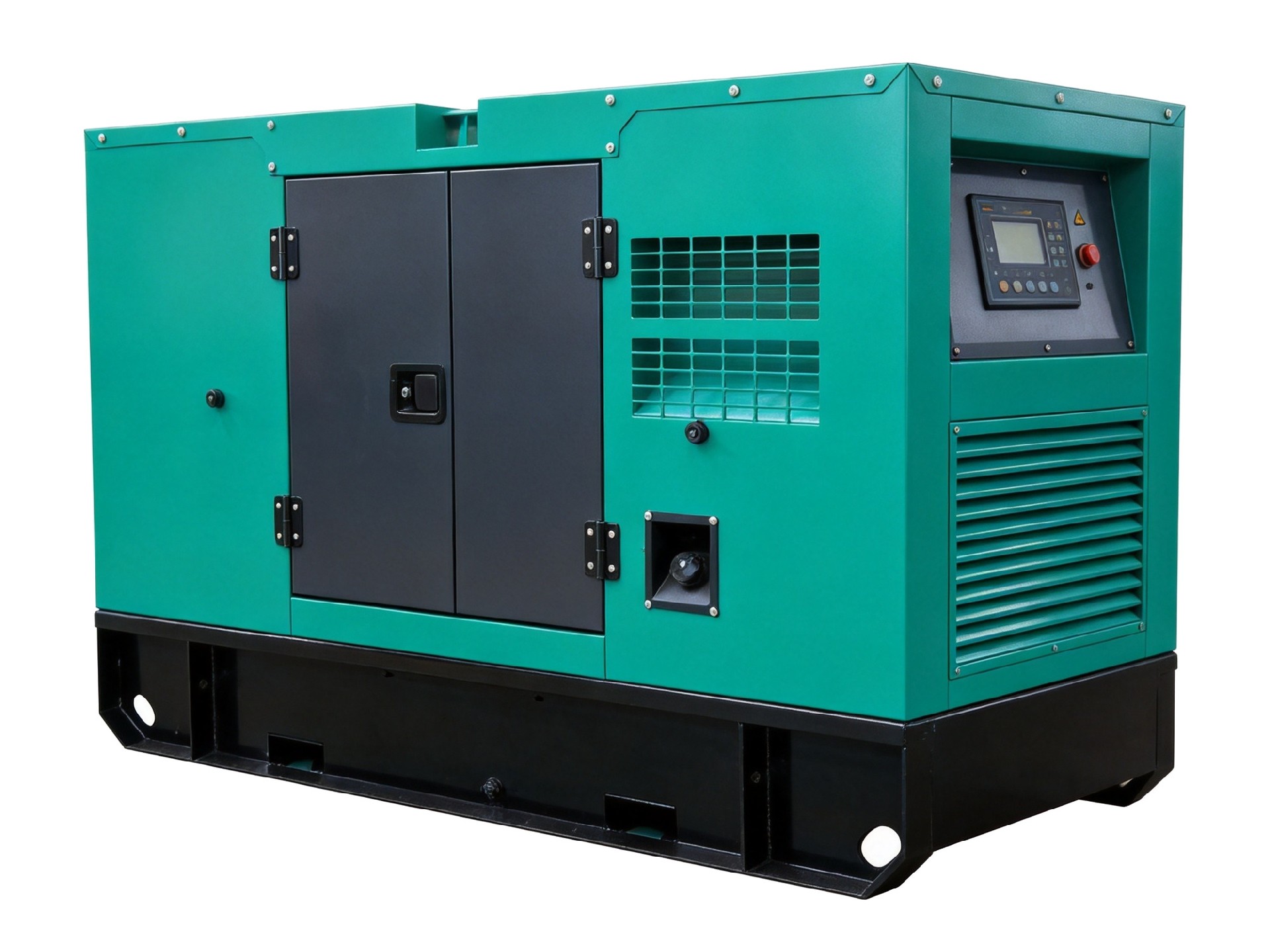
Illustrative generator photo; exact enclosure, frequency and configuration may differ from the model discussed.
Size for the real load and duty
Begin with an equipment schedule that separates continuous loads from intermittent loads. Record each load’s operating kW, expected run pattern and starting characteristics. Motors and other equipment may impose a short-duration demand when starting, so the design team should account for those demands using the equipment manufacturers’ data and the project’s load study. Do not size a genset from connected nameplate totals alone if the loads will not all operate together—or assume diversity without documenting it.
After establishing the demand, compare it with the prime-power rating for the intended operating role. Treat standby power as a separate rating for the specified standby duty, not as an automatic substitute for prime power. The figures in the product list show both ratings where provided, but do not define the allowable operating hours, loading profile or site-specific derating. Request those details for the selected model and planned use.
For larger projects, evaluate whether the requirement is for one set or a coordinated power system. Confirm the required operating arrangement, load steps, redundancy objective and control scheme with the EPC or electrical engineering team. The available product facts do not specify paralleling functions, automatic transfer switch options or control-panel configurations, so these should be stated explicitly in the inquiry rather than assumed.
Confirm frequency and voltage before comparing quotations
The listed models are rated at 50 Hz and generally show 1500 rpm. A project in Indonesia should still confirm its required frequency and voltage with the site electrical design and connected equipment. Do not infer that a 50 Hz model can meet a different frequency requirement, or that a listed voltage will suit every installation. Ask the supplier to confirm the exact terminal output, phase arrangement and any required configuration against the project documents.
Voltage deserves particular attention when comparing similar-sized generator sets. For example, the KC-P160 is listed at 230/400 V, several models from 20 kW to 1,118 kW are listed at 400/230 V, and the KC-YC3000 is listed at 380/220 V. Preserve the sequence and values as shown in the selected model’s technical documentation, then verify how they relate to the project’s required line and phase voltages.
The product records also list three-phase, four-wire, Y connection and AVR voltage regulation for the models presented. Confirm these details for the exact configuration being quoted. If the site has sensitive loads or particular voltage and frequency tolerances, provide the requirements to the supplier and request applicable data for the proposed set; do not assume the listed standard regulation values alone settle system compatibility.
Check the installation envelope and operating environment
Power rating is only one part of procurement. Confirm that the equipment room, foundation and access route can accommodate the selected set’s dimensions and weight. For example, the KC-DC20G is listed at 1700 × 750 × 1100 mm and 750 kg, while the KC-P160 is listed at 2800 × 950 × 1450 mm and 2,100 kg. The KC-C650 is listed at 4300 × 1700 × 2450 mm and 7,500 kg. These are model-specific figures; obtain an approved drawing and shipping or lifting information for the actual configuration.
Ventilation, cooling-air movement, exhaust routing, fuel arrangements and maintenance access should be resolved in the site design. The listed sets use a closed-loop water-cooling system with forced air cooling. That description does not replace a site-specific review of ambient conditions, ventilation or heat rejection. The product records do not provide installation drawings or environmental derating data, so request these when the location and operating conditions are known.
Noise is another procurement item to check against the site design. Several of the listed specification sheets state 102 dB at LP7M. Confirm the measurement basis, the exact model and whether that figure applies to the offered configuration. The facts provided do not establish a soundproof canopy option or a different acoustic performance; if noise control is required, specify the target and ask for supporting data.
Consider applications and emissions requirements
The power bands in the model list can help teams shortlist candidates for different load scales, but the application alone does not determine the right size. A facility engineer should establish the critical-load list, startup sequence and required operating role; an EPC contractor should align the rating with the electrical design; and a distributor should collect the same site data before recommending a configuration.
Anonymized project records document equipment at 200 kW, 600 kW and 1,200 kW. The records identify the industry only as “other” and do not authorize customer or location disclosure, so they should be treated only as examples of recorded equipment power levels—not as references for a named customer, a specific application or a performance result. (C1, C2, C3)
Emissions classification must be checked as a project requirement rather than inferred from the destination market. Some listed models are identified as China Stage II emission and others as China Stage III emission; the KC-P160 record does not state an emissions classification. Those labels are not evidence of approval for use in Indonesia. Ask the relevant project stakeholders to define the required approval and documentation, and request confirmation for the specific model offered.
Prepare a complete inquiry
A clear request for quotation helps avoid comparing unlike configurations. Include:
- Required prime power and standby power, plus the expected load profile and operating duty.
- Required frequency, voltage, phase and connection arrangement, referenced to the project electrical documents.
- Site location, ambient conditions, altitude if relevant, installation arrangement and access constraints.
- Emissions documentation and any approval requirements that the project team needs the supplier to confirm.
- Acoustic, enclosure, fuel-system, control-panel, transfer-switch or paralleling requirements, if applicable.
- Requested drawings, outline dimensions, weight, maintenance information and commissioning documentation.
- Required quantity and project schedule, so availability and delivery arrangements can be confirmed directly.
For an Indonesia project, ask the supplier to confirm the offered model’s exact 50 Hz rating, voltage configuration, emissions documentation, available options, commercial terms, delivery arrangements and service coverage for the installation location. These details are not established by the model specifications listed here and should be verified before award.
To begin a technically useful inquiry, share the load schedule, one-line diagram, intended prime or standby role, required voltage and frequency, installation conditions and any project-specific approvals. The supplier can then identify which listed rating merits review and confirm which configuration details remain to be resolved before procurement.
FAQ
Why is a diesel generator set producing black smoke?
Black smoke indicates incomplete combustion. Possible causes include a clogged air filter restricting intake air, excessive fuel injection, poor injector atomization, a sudden excessive load, or poor-quality diesel. Clean the air filter, use quality diesel, check the injection system, and avoid prolonged overloading.
After automatic shutdown, how can I tell whether protection has activated or hardware has failed?
First check the controller’s fault-code history. If overspeed, high-temperature or low-oil-pressure protection has activated, manually reset the protection after addressing the condition. If there is no fault code, check the battery and fuel system.
Why might a brushless generator produce no voltage after being stopped for a while?
The alternator may have lost residual magnetism. A field-flashing procedure can restore it. Windings are more prone to losing magnetism in damp conditions, so keep the generator room dry.
How often should a generator set receive routine maintenance, and what does it include?
For a new set, the first service is at 50 hours and includes changing the engine oil, oil filter and fuel filter. Routine maintenance is every 200–250 hours: change the oil and three filters; check the belt, coolant, battery and piping; tighten bolts; and clean the air filter and radiator. Carry out a full-set inspection annually.
What should I check if a generator set overheats or shuts down on a high-temperature alarm?
Check the coolant level, radiator blockage, fan speed, thermostat and water-pump condition. Clean the radiator cooling system and address blockages or poor coolant circulation.
Stay Updated with Our News
Subscribe to our newsletter for the latest industry insights and product updates.